


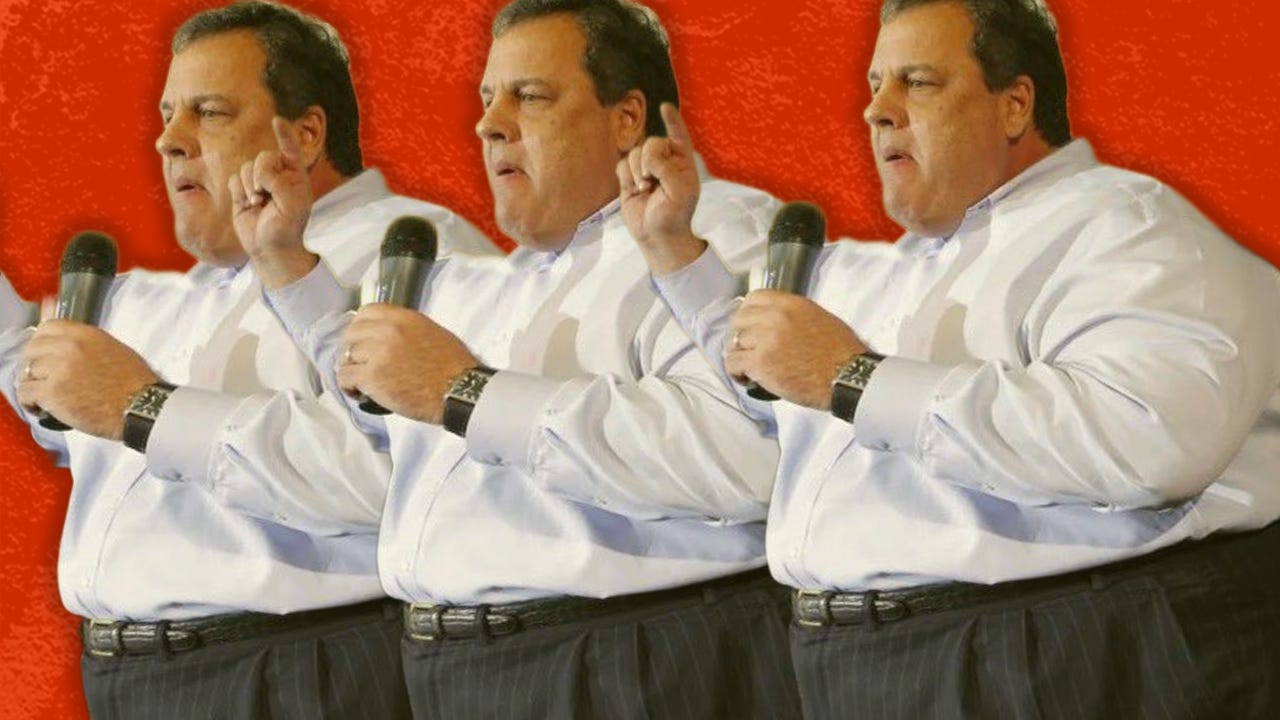
New Jersey politics has long resembled a carnival midway where the games appear simple, the prizes glitter enticingly, and the operators insist everything is perfectly legitimate. Yet the more closely one examines the mechanics of the enterprise, the more one begins to suspect that the odds have been arranged rather carefully. Few stories illustrate this curious arithmetic of power better than the saga of Chris Christie and his younger brother Todd Christie.
The Christie brothers were raised in Newark and later Livingston, New Jersey, in a middle class household. Their father Bill Christie worked as a Wall Street accountant while their mother Sondra served as a receptionist. Like many ambitious families in New Jersey’s upwardly mobile suburbs, the Christies encouraged achievement and advancement. Chris pursued the path of law and politics. Todd gravitated toward the high velocity universe of Wall Street.
Both brothers attended the University of Delaware. Chris built the resume of a future political combatant while Todd entered the trading pits where fortunes are made and lost at a speed that would make a casino blackjack dealer dizzy. Todd Christie eventually rose through the ranks of Spear, Leeds and Kellogg Specialists and became its chief executive. When Goldman Sachs purchased the firm in 2000 for more than $6 billion dollars, Todd Christie reportedly walked away with approximately $60 million dollars personally.
Sixty million dollars is a striking figure. It is the kind of windfall that transforms a Wall Street career into a permanent seat at the table of financial privilege. Yet the celebration of that extraordinary payday would soon encounter an inconvenient regulatory storm.
In 2005 the Securities and Exchange Commission charged twenty specialist traders connected to Spear, Leeds and Kellogg with civil fraud for engaging in trading practices that enriched their firms while disadvantaging customers. Todd Christie was among those charged. Regulators alleged that between 1999 and 2003 he participated in more than sixteen hundred improper trades involving major corporations including IBM, AOL Time Warner, and AIG. According to the SEC, these maneuvers produced roughly 1.59 million dollars in profit for the firm while investors absorbed approximately 1.4 million dollars in additional costs.
One might reasonably assume that such allegations would attract the interest of criminal prosecutors. Indeed fifteen of the twenty traders were indicted on criminal fraud charges by the United States Attorney’s Office for the Southern District of New York. Those charges carried potential prison sentences of up to ten years. Todd Christie was not among them.
Instead Todd Christie faced only civil enforcement. In 2008 he settled the SEC case without admitting wrongdoing, agreeing to disgorge profits and pay penalties while acknowledging hundreds of improper trades. Criminal charges never materialized.
The official explanation offered by prosecutors was simple. The evidence, they said, supported civil enforcement but not criminal prosecution. The decision was made by the office of United States Attorney (USA) David Kelley in the Southern District of New York (SDNY). Chris Christie, serving at that time as United States Attorney for the District of New Jersey, had no formal jurisdiction over the case. That is the official explanation.
Yet politics, like comedy, depends heavily on timing. Two years after Todd Christie escaped criminal prosecution, Chris Christie’s office awarded David Kelley a lucrative corporate monitorship connected to a deferred prosecution agreement involving Biomet Orthopedics. The assignment required Kelley to oversee corporate compliance reforms following allegations that the company had paid kickbacks to doctors for using its hip and knee implants.
Monitorships of this sort are not modest consulting gigs. They can generate millions of dollars in legal fees. The exact value of Kelley’s appointment was never publicly disclosed, but such arrangements frequently produce enormous revenue streams for the firms involved.
Christie defenders insist the selection was based solely on merit. They note that monitors were paid by the companies involved rather than taxpayers. They also observe that the practice of appointing outside monitors was common in federal deferred prosecution agreements during that period.
Perhaps so. Yet the optics would cause even the most charitable observer to pause. A politically connected Wall Street executive avoids criminal prosecution. The prosecutor who made that decision later receives a lucrative assignment from the executive’s brother, who happens to be a powerful United States Attorney. Are we truly expected to believe that no curious citizen might raise an eyebrow at this sequence of events?
Chris Christie has always portrayed himself as a crusading corruption fighter. During his tenure as U.S. Attorney he prosecuted more than one hundred public officials in New Jersey. The reputation served him well politically, helping propel him to the governor’s office in 2009.
Yet the pattern of lucrative monitorships under Christie’s watch did not end with David Kelley. In another prominent case he appointed former United States Attorney General John Ashcroft as a corporate monitor in a settlement involving medical device manufacturer Zimmer Holdings. Ashcroft’s firm reportedly earned up to fifty two million dollars from that assignment. Christie also appointed David Samson, a close political ally, to another monitorship role. One might ask whether New Jersey’s celebrated corruption fighter had inadvertently created a rather comfortable patronage system for well connected legal heavyweights.
Meanwhile Todd Christie continued to prosper. His Wall Street fortune migrated into real estate investments and private financial ventures. He later founded Big Blue Trading and remained active in business development and advisory roles. His wealth spread across properties in Harrison, Mendham Township, and Point Pleasant Beach. Political contributions followed as well, with hundreds of thousands of dollars flowing into Republican causes and campaigns. This is, of course, perfectly legal. Successful businessmen are free to invest their money and support the political causes of their choosing.
Yet the Christie story does not end there. Chris Christie’s tenure as governor eventually became overshadowed by the now infamous Bridgegate scandal in which traffic lanes on the George Washington Bridge were closed in apparent retaliation against a mayor who declined to endorse Christie’s reelection campaign. Although the Supreme Court later overturned the criminal convictions of two Christie associates involved in the scheme, the episode left behind a lingering question about the culture that had developed within the governor’s office. When political staff believe it acceptable to weaponize the busiest bridge in America as a tool of petty political vengeance, what does that say about the broader environment in which such decisions are made?
The Christie brothers present a fascinating case study in modern American power. One brother accumulates a $60 million dollar Wall Street windfall and becomes entangled in a trading scandal that somehow avoids criminal prosecution. The other brother ascends through the federal prosecutorial system, appoints lucrative monitorships to well connected allies, and ultimately governs one of the nation’s most politically colorful states. Everything, we are assured, was perfectly above board. Perhaps it was.
However, this story contains too many coincidences, fortunate outcomes, and advantageous relationships to keep New Jersey’s political gossip mills grinding for decades to come. In a state where corruption scandals are almost a cultural institution, the Christie saga fits rather comfortably into the local folklore. One might say it represents the Garden State’s most enduring tradition. When power, money, and politics intersect, remarkable things can happen. The real question is whether the public is ever permitted to see the full ledger.
Thank you for this lucid and morally focused article. I must admit that when I finished reading this item I experienced great sadness of
heart. You should be honored for bringing these real but elusive matters to the public’s attention.
Thank you for another excellent article. Have you done one on the Pritzger’s?