


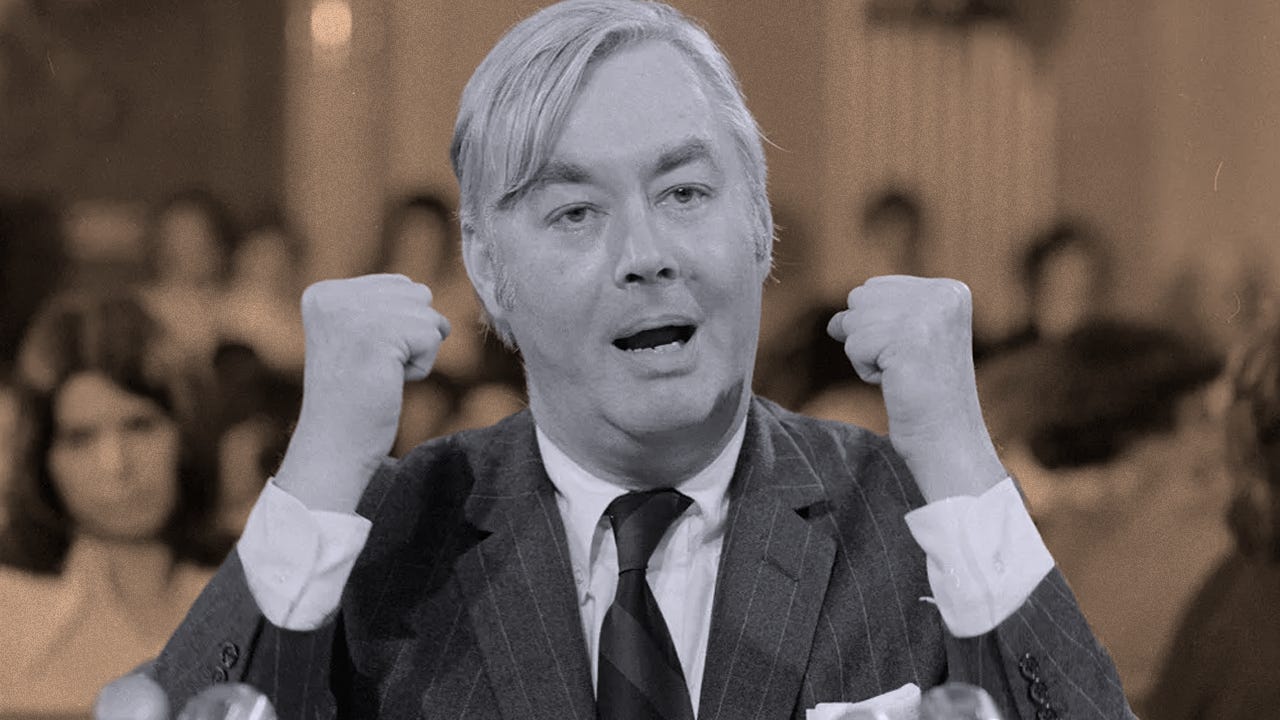
“Everyone is entitled to his own opinion, but not to his own facts.”
— Daniel Patrick Moynihan
Few figures in American public life have earned such widespread bipartisan respect as Daniel Patrick Moynihan: a complex, multifaceted figure who embodied principled liberalism, intellectual rigor, pragmatic statesmanship, an unmistakable dapper presence, sharp-suited, bow-tied flair that projected gravitas and quiet defiance.
Known to friends as Pat, born in Tulsa, Oklahoma in 1927 and raised in the gritty streets of New York City’s Hell’s Kitchen after his family moved when he was six, he rose from deep poverty and family instability following his father’s abandonment.
From age 11, Moynihan contributed to his family’s support by shining shoes in Times Square and taking on other odd jobs amid the hardships of the Great Depression. Later, he worked briefly as a longshoreman on the docks. These formative experiences in poverty and urban labor fostered remarkable resilience and a profound empathy for the struggles of working-class city life. His journey from such humble origins to high office underscores the power of determination, education, intellect, and dedicated public service in overcoming adversity.
His early New York City Democratic politics were unpromising. In the 1950s, he worked on campaigns and held minor staff posts under Governor W. Averell Harriman, immersing himself in urban machine politics.
His ambitions stalled in 1965 when he ran unsuccessfully in the Democratic primary for president of the New York City Council, a powerful role overseeing the city’s legislative body (later evolved into the Public Advocate), on the ticket headed by mayoral candidate Paul Screvane (former sanitation commissioner and City Council President), alongside Orin Lehman for comptroller.
At the time, this ethnically balanced slate (Irish Italian Jewish) was by design to appeal to the NYC party’s diverse base, but the entire ticket lost decisively in the primary to rival slates, including Abraham Beame’s.
Lacking insider connections in a very crowded field, he suffered a crushing defeat, finishing far behind. Critics dismissed him as an academic outsider unsuited for the rough-and-tumble of local politics, more at home with policy papers than grassroots politicking, earning him the derisive label of a “dud” in some media and political circles.
Undeterred, Moynihan shifted straight forward to federal roles, serving as Assistant Secretary of Labor under Kennedy and Johnson, where he penned the controversial 1965 report “The Negro Family: The Case for National Action,” highlighting Black family breakdown amid poverty and discrimination. It sparked backlash but cemented his role as a polarizing yet visionary voice.
Disillusioned with the liberal establishment, he discreetly reached out to Richard Nixon before 1968 and joined the Republican administration as a Democrat and Harvard professor, an unusual, controversial cross-party move driven by Nixon’s admiration for Moynihan’s intellect and his 1967 speech on “The Politics of Stability.”
In January 1969, as Counselor to the President for Urban Affairs, he exerted major influence on domestic policy during his tenure through late 1970, advising Nixon on urban issues, poverty, welfare, civil rights, campus unrest, school busing, revenue sharing, voluntary action programs, and urban redevelopment (such as Pennsylvania Avenue projects). Working closely with aides like John Ehrlichman, Moynihan bridged liberal ideas with Nixon’s practical conservatism, often clashing over budget-conscious approaches but earning mutual respect.
His primary initiative was endorsing the Family Assistance Plan (FAP), Nixon’s groundbreaking proposal for a guaranteed minimum income (via negative income tax) for families including the working poor, incorporating work incentives and requirements.
It passed the House but stalled in the Senate amid opposition from both liberals (who saw it as insufficient) and conservatives (who viewed it as too generous). Moynihan later chronicled its failure in his 1973 book The Politics of a Guaranteed Income, blaming bureaucratic resistance, welfare-professional self-interest, and partisan gridlock.
During his White House years, Moynihan advocated revenue sharing to decentralize federal power. He was also known for candid, often, blunt memos to Nixon.
One of the most infamous was the January 16, 1970 “benign neglect” memo. It acknowledged “extraordinary progress” by Black Americans in the 1960s, with rising education, income, and school attendance despite persistent discrimination.
The memo suggested the racial issue might benefit from a period of “benign neglect.” This meant less constant public spotlight and inflammatory debate, so quiet gains could continue without being drowned out by “hysterics, paranoids, and boodlers on all sides.”
The full key passage reads, “The time may have come when the issue of race could benefit from a period of ‘benign neglect.’ The subject has been too much talked about... We may need a period in which Negro progress continues and racial rhetoric fades.”
Leaked to the New York Times, the phrase sparked outrage as seeming to advocate indifference or retreat from civil rights. Moynihan insisted it was taken wildly out of context. He was not proposing to ignore racism or cut programs.
Instead, he wanted to tone down divisive noise and focus on steady, evidence-based advancement. This approach was fully in line with his principled liberalism and antipoverty commitment. Nixon later called the backlash ironic, noting Moynihan was one of the administration’s strongest civil rights advocates.
Moynihan cultivated a distinctive sartorial style that set him apart throughout his career, but it was especially striking during his Nixon-era White House and diplomatic roles, giving him the look of a smart, old-fashioned 19th-century statesman living in the 20th century—learned, classic, and distinctive.
He was almost never seen without his trademark bow tie, favoring patterns like polka dots (often blue-and-white), stripes, or solids that became a lifelong hallmark of his style. He once demonstrated the art of tying one in old videos and interviews, explaining it as a simple, instinctive process akin to tying shoelaces. He used the accessory to project intellectual gravitas while deliberately rejecting the conventional necktie.
His suits were timeless and top-tier, featuring Savile Row-inspired pinstripes (navy blue or patterned, reminiscent of Winston Churchill’s iconic look), double-breasted seersucker for warmer climates, hearty tweeds, corduroys, button-down collars, and the occasional well-loved cardigan with leather elbow patches, blending Ivy League polish with old-world eccentricity.
Daniel Patrick Moynihan was often seen peering owlishly through thick horn-rimmed or tortoiseshell-framed eyeglasses, which complemented his professorial demeanor, bow ties, and intellectual style, reinforcing the scholarly look that defined his public image as a senator and thinker. In later years, he favored large, roundish tortoiseshell or brown-framed glasses that accentuated his thoughtful expressions, as seen in numerous portraits and interviews.
He notably sported small lapel pins, including American flags during campaigns, possibly shamrock-inspired ones for Irish pride, or academic insignia, that added subtle scholarly and patriotic touches. These subtle, yet, deliberate, consistent, choices projected intellectual refinement, a slight defiance of norms, and thoughtful somberness, making him an unmistakable figure in diplomatic circles, from New Delhi to the UN and beyond.
As Ambassador to India (1973–1975), he navigated New Delhi’s formal settings in his signature pinstripes and bow ties, standing out with quiet authority against the subcontinent’s vibrant backdrop. Later at the United Nations (1975–1976), the same ensemble, often paired with his favored tweeds, seersucker, or corduroys, commanded attention amid global debates.
He later served as U.S. Ambassador to India under Nixon and Ford (1973–1975) and U.S. Ambassador to the United Nations under Ford (1975–1976). When returning to New York politics in the mid-1970s, he faced suspicion over his Nixon years.
In the 1976 U.S. Senate primary for the seat vacated by James Buckley, Moynihan essentially buried his baggage to narrowly defeat ultra-liberal Congresswoman Bella Abzug, a fiery feminist and Vietnam critic, in a five-way race by about 10,000 votes.
To win, he emphasized his academic credentials, tough UN ambassadorship (confronting anti-American and anti-Israel rhetoric), pragmatic moderation, and working-class roots, positioning himself as a sensible alternative to extremism. He then handily defeated Republican James Buckley in the general election and held the seat until 2001.
Throughout his Senate career, Moynihan remained recognizable in pinstripe suits, bright bow ties, and Irish rumpled tweed hats, a visual signature matching his intellectual independence. The Village Hat Shop glossary and millinery resources explicitly list a “character hat” as the “late 1970s rumpled tweed hat worn by New York Senator Pat Moynihan,” confirming it as part of his public image.
He remarkably chaired the Finance Committee and Environment and Public Works Committee, while also holding academic posts as professor at Harvard and director of the Joint Center for Urban Studies. This extraordinary array of high-level positions across party lines, the only person in U.S. history to hold senior executive roles under four consecutive administrations (Kennedy through Ford).
He died in 2003, leaving a legacy of bold, influential ideas, bipartisan service, and an unmistakable style. Moynihan was known for his sharp wit, intellectual depth, and ability to bridge ideological divides. Once branded by the media as a “dud,” after his 1965 electoral flop, after dismissing him as a scholarly misfit unfit for the gritty arena of real politics. Yet, he emerged full throttle, serving presidents of both parties with distinction, earning genuine respect across ideological divides for his unflinching honesty and policy depth; rising to become one of the Senate’s most influential voices.
In the end, Daniel Patrick Moynihan stands out as tangible proof that a boy abandoned by his father, raised in poverty amid the chaos of Hell’s Kitchen, forced to shine shoes and work the docks from age 11, can rise phoenix-like through sheer intellect, unyielding grit, and selfless service to the nation—becoming a model of American upward mobility and the transformative power of ideas over adversity.
As a Democrat facing significant backlash from liberals who viewed Nixon as politically toxic, Moynihan nonetheless crossed party lines to join the administration, prioritizing service to the presidency over personal or partisan loyalty. In an era of extreme partisanship, this kind of cross-aisle service is increasingly scarce.
Very nicely done, very specific, meaty and detailed. A great way to truly appreciate strong will, commitment and character. Shoe shiner to Ambassador to India and US representative in the UN and a well storied Senatorial career. His ability to communicate comes through in your article. No doubt, the most important aspect of his entire life. Excellent work, I appreciate your presentation. It did justice to his career and personal character.
Daniel Patrick Moynihan is the antidote to everything wrong with today’s Democrat Party. He believed in data, consequences, and moral seriousness—three things modern Democrats openly sneer at. Moynihan could work for Kennedy, Johnson, and Nixon without having a meltdown or demanding ideological purity tests. Today’s party would cancel him in a heartbeat for the Moynihan Report, for “benign neglect,” or simply for talking honestly about social decay. He understood that compassion without truth is cruelty, and that policy divorced from facts is just theater. Moynihan wasn’t “evolving.” He was thinking. That kind of Democrat no longer exists.