


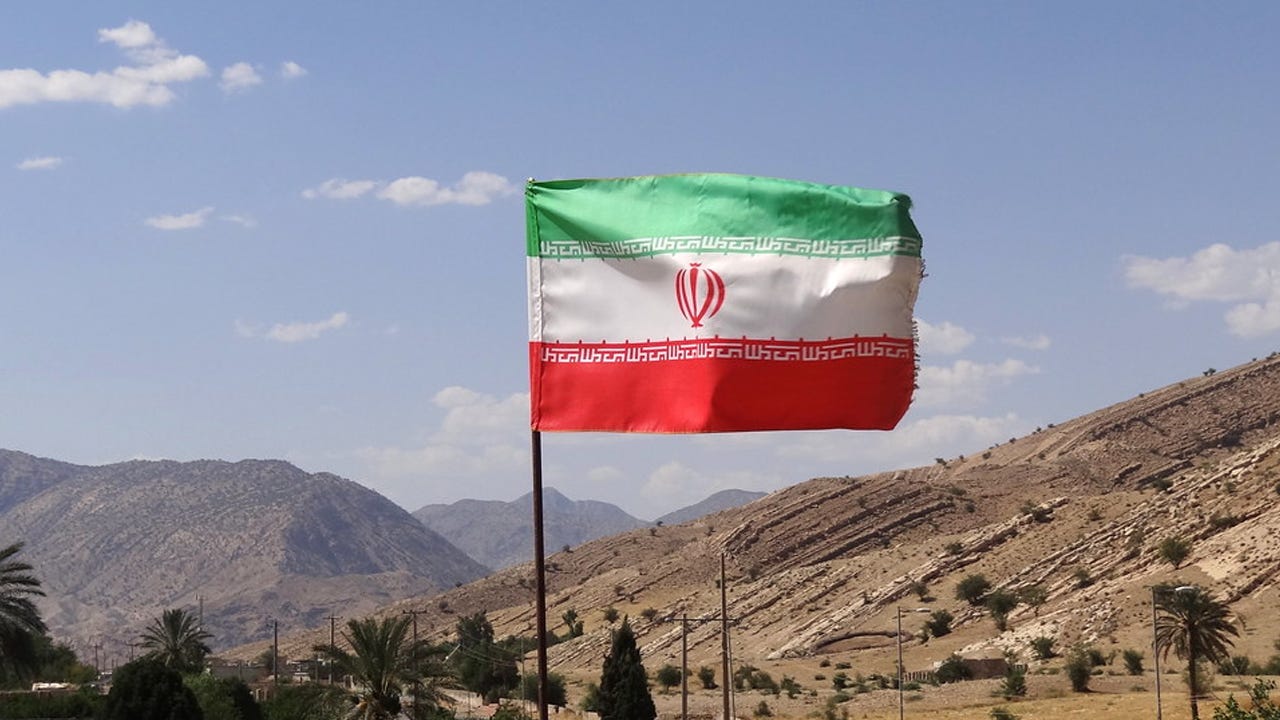
Iran now stands on the cusp of a historic inflection point, a moment freighted with consequence not merely for the Middle East but for the entire geopolitical architecture of the modern world. To comprehend the convulsions presently roiling the Islamic Republic, Americans must first reacquaint themselves with a truth deliberately obscured by decades of propaganda and academic obfuscation: Iran was once a sophisticated, Westernized, and forward looking nation before it was hijacked by clerical extremism.
Prior to 1979, Iran was among the most cosmopolitan societies in the region. Tehran was a thriving metropolis of universities, theaters, and international commerce. Iranian women dressed freely. Students studied abroad. The country, though imperfect under the Shah, was oriented toward modernity, economic development, and engagement with the West. Iran was not governed by medieval dogma. It was a nation advancing, however unevenly, toward the future.
That trajectory was violently derailed by the Iranian Revolution. In a seismic political rupture, radical clerics led by Ayatollah Ruhollah Khomeini overthrew the Shah and erected a theocratic state predicated on ideological absolutism and religious coercion. This was not a revolution of liberty. It was a revolution of repression. Almost immediately, the new regime defined the United States as its principal enemy, not because America had invaded Iran, but because America embodied everything the mullahs despised: pluralism, secular governance, and individual sovereignty.
This animus culminated in one of the most ignominious episodes in American diplomatic history. On November 4, 1979, Iranian militants stormed the United States Embassy in Tehran and seized fifty two American diplomats and citizens. For 445 days they were held hostage, subjected to psychological torment, and paraded before the world as trophies of revolutionary vengeance. This was not a spontaneous mob action. It was a calculated act of state sponsored terrorism, designed to signal that the new regime would govern through intimidation and theatrical cruelty.
From this cauldron of radicalism emerged the Islamic Revolutionary Guard Corps, known as the IRGC, the most pernicious and powerful institution in Iran today. The IRGC is not merely a military force. It is a sprawling, shadowy empire that controls vast sectors of the Iranian economy, from energy and construction to banking and telecommunications. It runs intelligence operations, oversees domestic repression, and commands terrorist proxies across the Middle East, including Hezbollah in Lebanon, Hamas in Gaza, and Shiite militias in Iraq and Syria. Its core mission is not national defense. Its mission is to perpetuate the Islamist regime and export its revolutionary ideology through violence and subversion.
Because of this malignant conduct, Iran is subjected to sweeping economic sanctions imposed primarily by the United States and its allies. These sanctions are not symbolic. They are designed to isolate the regime from the global financial system, restrict its ability to sell oil, block access to foreign currency, and prevent it from acquiring technology and materials that could be used for weapons development or internal repression. Sanctions mean that Iranian banks are largely cut off from international markets. They mean foreign companies risk severe penalties if they do business with Tehran. They mean the regime has far less revenue to fund terrorism, nuclear ambitions, and the luxurious lifestyles of its ruling elite.
Yet the true victims of this system are not the clerics. They are the Iranian people. The men and women of Iran increasingly reject the suffocating yoke of the mullahs. Again and again they have poured into the streets demanding dignity, accountability, and the right to choose their own political destiny. They are not asking for cosmetic reforms. They are demanding the end of a regime that has bankrupted their economy, brutalized their youth, and imprisoned their future. Women defy compulsory veiling. Students chant for freedom. Workers protest corruption and deprivation. These are not the acts of a contented populace. These are the unmistakable symptoms of a society yearning to breathe.
The regime clings to power only through relentless repression enforced by the IRGC and its paramilitary auxiliaries. Protesters are beaten, imprisoned, tortured, and in some cases killed. Journalists are silenced. Dissidents vanish into the maw of a judicial system designed to crush dissent rather than dispense justice. Yet despite this reign of terror, the demonstrations persist. Why? Because the human appetite for liberty is irrepressible.
What is unfolding in Iran today is not a fleeting disturbance. It is the slow, inexorable erosion of a theocratic edifice that has lost the consent of the governed. History teaches us that no regime, however brutal, can survive indefinitely once its people withdraw their allegiance.
The Iranian people remember who they were before 1979. They remember a nation that was part of the modern world rather than a pariah state ruled by zealots. They know they were not born to live under clerical despotism. They know they deserve the right to determine their own future.
How long can a government endure when it rules only through fear? How long can an ideology survive when it is rejected by the very people it claims to represent?
The answer is written not in the proclamations of the mullahs, but in the courage of the Iranian people. And when this regime finally collapses, it will not be because of foreign conquest. It will be because a proud nation reclaimed its stolen destiny.
Those of us above 65 might remember how once upon a time the Mainstream Media told us that the Shah of Iran was really, really bad. And how a brave dissident living in Paris would save the country from the evil Shah. He would broadcast sermons on his very own Farsi Language BBC radio program. After his return to Iran, the courageous individual was named Time Man Of The Year in 1979.
https://share.google/bxm2d1Kf1OzI9bSZ6
Carter dropped the ball. This is why the coup succeeded and 52 US hostages suffered so long. It was expected by Israeli leaders that the US would come in and get rid of the radicals, after the radicals had gotten rid of the oppressive and corrupt shah, so that Israel could then take control of the oil. Those US hostages and Carter's inability to handle the hostage situation properly resulted in decades of danger against Americans and an almost complete loss of "peace through strength" in the region. Carter was a fool.