


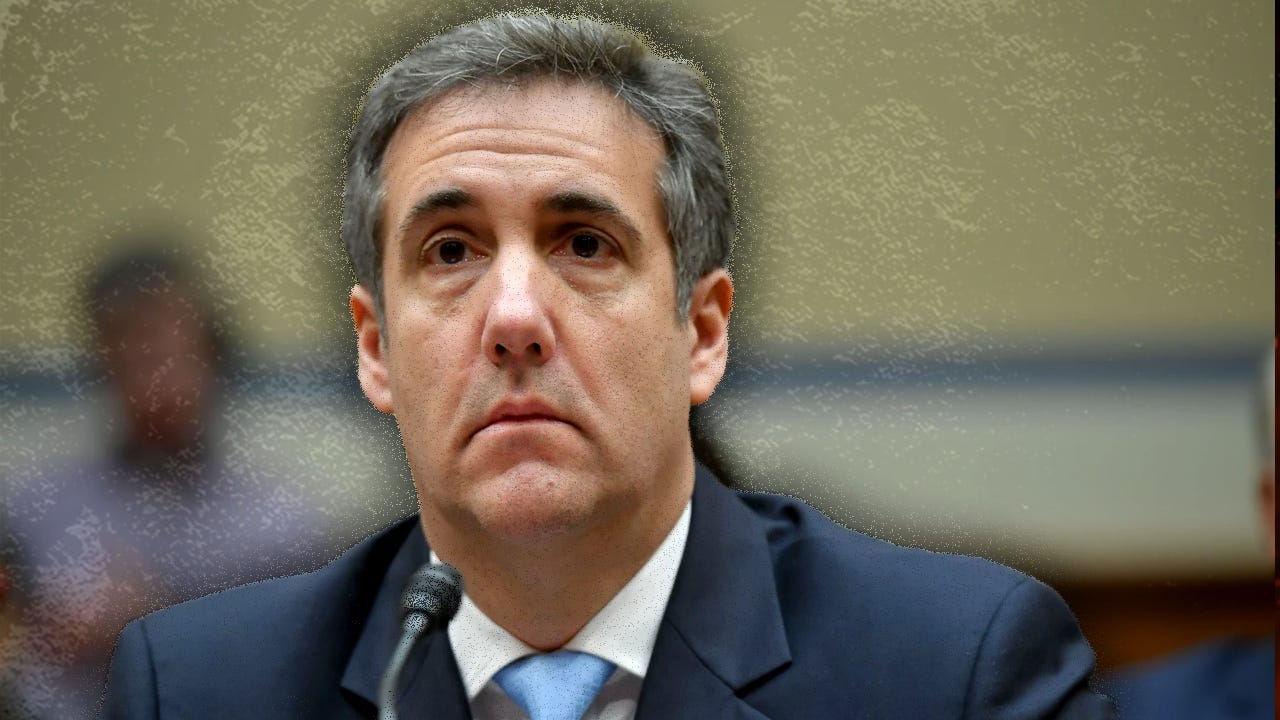
There is an old rule in politics: words matter. There is an even older rule in a courtroom: sworn words matter even more.
That distinction is essential in understanding what seems to be the extraordinary reconciliation between President Donald Trump and his former personal attorney Michael Cohen — and the increasingly widespread claim that Cohen has now “recanted” the testimony he gave against Trump.
He has not.
Perhaps I am particularly sensitive to this question. Charged by Special Counsel Robert Mueller’s thugs and pressured to give false testimony against President Trump in return for leniency in sentencing for the contrived process crimes I had been convicted for in a DC Soviet style show trial, I refused.
Michael Cohen chose a different path He told Trump’s persecutors what they wanted to hear.
President Trump has understandably seized upon Cohen’s alleged about-face regarding the prosecutors who pursued him. In January, Cohen accused the offices of Manhattan District Attorney Alvin Bragg and New York Attorney General Letitia James of pressuring him to provide testimony useful to their cases against Trump. Cohen wrote that he “felt pressured and coerced” to provide information and testimony that would satisfy the government’s desire to convict Trump.
I’m not sure President Trump understands that Michael Cohen has not recanted or withdrawn any of his testimony against Trump in the so-called hush money case brought by Manhattan DA Alvin Bragg. But saying “I felt pressured and coerced” is not the same thing as saying “my testimony was false.”
Cohen himself has gone out of his way to make precisely that distinction.
When Cohen appeared with Dan Abrams on SiriusXM and was directly asked whether his allegations of prosecutorial pressure meant his previous testimony was untruthful, Cohen answered unequivocally: “No, to the exact contrary.” He then said that nothing about his allegations of pressure should suggest that the information he provided was anything other than “truthful and accurate”
There is simply no intellectually honest way to describe that as a recantation. A recantation means taking back a previous statement. It means saying, in substance: What I told you before under oath was not true.
Cohen has not done that. In fact, he has specifically done the opposite.
This distinction became glaring during Cohen’s remarkable August reunion with President Trump on WABC. Trump repeatedly praised Cohen for supposedly recanting his testimony. “You took it back,” Trump told him, adding, “I wouldn’t even be talking to you right now if you didn’t, to be honest.” Cohen did not correct the President. That’s because he has taken nothing back. He said nothing.
That silence undoubtedly helped create the impression that Cohen had withdrawn his allegations against Trump. But silence is not a recantation.
And when Cohen was subsequently confronted directly with the question, he stood behind his sworn testimony. The New York Times, got this narrow but important factual point right: Cohen “has not taken any of it back.”
This presents a rather obvious contradiction that neither Cohen nor many of those celebrating his supposed recantation appear anxious to address. If prosecutors pressured Cohen to provide testimony designed to secure a conviction against Donald Trump, what exactly did Cohen say because of that pressure that was untrue?
Name it. Which statement? Which allegation? Which material fact? What part of his sworn testimony does Michael Cohen now withdraw?
Thus far, the answer is: none of it.
Cohen testified for Bragg in the Manhattan criminal prosecution that ultimately resulted in Trump’s conviction on 34 counts of falsifying business records. He also testified in Attorney General James’s civil fraud case. His testimony was not incidental to either proceeding, although it was also not the only evidence presented against Trump.
Those were not television interviews. They were not podcasts. They were not Substack posts. They were sworn testimony in legal proceedings.
Cohen now says the prosecutors behind those cases were politically motivated and that he felt pressured and coerced by them. Yet he simultaneously maintains that what he told the courts was truthful and accurate. Both statements can theoretically be true. A witness can believe prosecutors exerted enormous pressure upon him while still maintaining that the testimony he ultimately gave was truthful.
But if that is Cohen’s position, then it is not a recantation.
The distinction is particularly important because Cohen himself appears acutely aware of it. When CNN’s Jake Tapper characterized Cohen as saying he had been “pressured and coerced” into testifying against Trump, Cohen corrected him. The comment, Cohen explained, was that he “felt pressured and coerced.” Cohen then added: “And I think the distinction is extremely important.”
Indeed it is.
Cohen is an attorney. He knows the difference between alleging prosecutorial pressure and admitting that sworn testimony was false. He also knows the potential consequences of admitting that testimony he gave under oath was knowingly false. Perhaps Cohen understands that to recant his sworn testimony now could open him to new State charge of perjury. Perhaps those encouraging Cohen to recant his sworn testimony understand they could face charges of obstruction if Cohen was given anything in return for his new claims.
This is not to minimize what Cohen has said. His accusations against Bragg and James are extraordinary precisely because he was one of the government’s most important cooperating witnesses. According to Cohen, prosecutors approached their investigations determined to build cases against Trump and pressured him to provide information useful to those cases. Those allegations deserve scrutiny on their own merits.
But they should not be embellished into something Cohen himself refuses to say.
There is another fascinating dimension to all of this. Michael Cohen spent years attacking Donald Trump in the most viciously personal terms imaginable. He wrote two anti-Trump books. He became a fixture in the anti-Trump media. He testified against his former boss. According to the Times, Cohen sought a pardon from President Joe Biden and, after failing to obtain one, subsequently resubmitted his pardon application with Trump’s name in Biden’s place.
Criticism of Alvin Bragg is not recantation. Criticism of Letitia James is not recantation. Saying prosecutors pressured you is not recantation. Calling the system politically weaponized is not recantation. Even seeking a presidential pardon is not recantation.
Taking back your sworn testimony is recantation.
Michael Cohen has conspicuously refused to do that.
Perhaps Cohen will someday say explicitly that material testimony he gave against Donald Trump was false. If he does, that will be major news, and it will raise profound questions about the prosecutions themselves as well as Cohen’s own conduct under oath.
But he hasn’t said it yet.
Instead, when finally asked the question directly, Cohen said exactly the opposite: the information he provided was “truthful and accurate.” President Trump has claimed that Cohen “fully RECANTED his testimony.” But the first half of that proposition is contradicted by Cohen’s own public statements. And it raises the question that Cohen has still declined to answer:
What, specifically, did Michael Cohen testify to about Donald Trump that was not true?
But there has not been a recantation.
Well if he admits to lying then he's going to be in a lot of trouble for it.
Thank you for the clarification of this matter. Your attention to detail really clears up any confusion about Michael Cohen. It seems to me that there are different degrees of ‘sleeze bag-ness’! Good assessment of Michael Cohen’s word salad!!!