


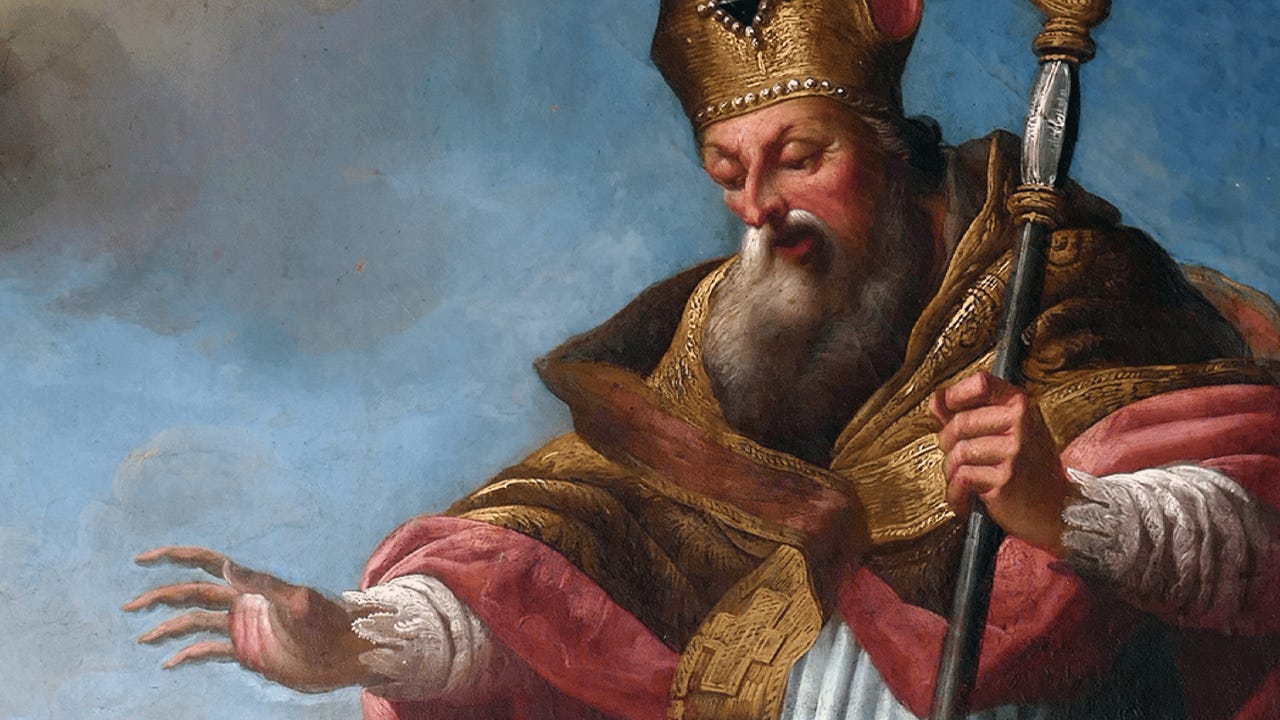
Who was Saint Valentine, and how did a Christian martyr’s feast day become transformed into a carnival of candy hearts, greeting cards, and commercialized sentimentality? How did a solemn commemoration of sacrificial faith become repackaged as a secular spectacle divorced from its sacred origin?
Saint Valentine, known in Latin as Valentinus, refers to one or more early Christian martyrs of the third century living under the shadow of the Roman Empire. The Roman Catholic Church has long recognized at least two Valentines who were martyred on February 14, one a priest in Rome and another a bishop in Terni, ancient Interamna, Italy. A third Valentine is mentioned as a martyr in Roman Africa, though little is known about him. The most widely accepted account centers on a Roman priest and physician who lived during the reign of Emperor Claudius II Gothicus, a brutal persecutor of Christians.
Valentine lived in an age when professing Christianity was not a lifestyle choice but a potential death sentence. Christians were hunted, imprisoned, tortured, and executed for refusing to worship pagan gods or offer incense to the emperor. To be Christian in that era meant to live in open defiance of state power.
Born in the mid third century, possibly in Rome or Terni, Valentine was known for his piety, learning, and charity. He ministered to Christians in hiding. He comforted prisoners. He offered spiritual counsel to those awaiting execution. Ancient tradition also credits him with miraculous healings, including restoring sight to the blind.
One legend that endured through the centuries claims Claudius II outlawed marriages for young men, believing single soldiers fought more fiercely without familial attachments. Valentine, recognizing marriage as a sacrament instituted by God, secretly performed Christian weddings for couples who wished to consecrate their unions before Christ. If true, this alone would have been sufficient cause for his arrest.
Another story recounts that while imprisoned, Valentine befriended his jailer and healed the jailer’s blind daughter. Before his execution, he reportedly wrote her a farewell message signed, “from your Valentine.” These stories were later popularized in medieval literature and helped associate Valentine’s feast day with courtly love.
But even if portions of these legends are embellished, they reflect a deeper truth. Valentine stood for fidelity. He stood for the sanctity of marriage. He stood for Christian love rooted in sacrifice rather than sentiment.
What is a martyr? A martyr is someone who willingly suffers death rather than renounce the faith. Not all saints are martyrs. Many saints lived long lives of holiness. But every martyr is a saint, and Saint Valentine is honored precisely because he chose Christ over survival.
Valentine was arrested for aiding Christians, possibly for performing forbidden marriages, and certainly for refusing to abandon his faith. Accounts vary, but tradition holds that he was beaten with clubs and then beheaded on February 14 around the year 269 AD along the Via Flaminia in Rome. His body was buried there, and later a basilica was built over his grave by Pope Julius I.
For centuries, February 14 was observed as a feast day marking Valentine’s martyrdom. What is a Catholic feast day? It is a liturgical day set aside to honor a saint or a sacred mystery, offering Mass, prayers, and remembrance of the individual’s witness to Christ. It is not a party. It is not a marketing opportunity. It is a religious observance rooted in worship.
Over time, medieval poets blended Valentine’s feast day with romantic imagery. Later centuries layered pagan customs, commercial interests, and sentimental clichés on top of a sacred foundation. By the twentieth century, the holy martyr had been buried beneath chocolate wrappers and advertising slogans.
Yet Saint Valentine was never about disposable romance. He was about covenant. He was about vows. He was about a love willing to suffer and die rather than betray truth.
The Catholic Church continues to recognize Saint Valentine as a saint and martyr, even though his feast was removed from the universal calendar in 1969 due to limited historical documentation. Local veneration persists. Relics attributed to him exist in churches across Europe.
Do other Christian denominations accept Saint Valentine as a saint and martyr? Eastern Orthodox Christians also venerate Valentine. Many Anglicans and Lutherans commemorate him historically. While Protestant traditions may not emphasize saintly intercession in the Catholic sense, most acknowledge Valentine as an early Christian who died for his faith.
Saint Valentine’s true legacy is inseparable from the sacrament of Holy Matrimony. Marriage is not a contract between two consumers. It is a covenant before God. It is the union of one man and one woman ordered toward mutual sanctification and the raising of children. It is a living icon of Christ’s love for His Church.
Real love is not a feeling that flickers and fades. Real love is sacrifice. Real love is perseverance. Real love is fidelity when it is difficult.
Saint Valentine did not die for flowers and candy. He died because he believed Christ is King. He died because he believed marriage is holy. He died because he believed truth is worth more than life itself.
February 14 is not a secular holiday. It is a Catholic feast day. It is a reminder that authentic love flows from God, is anchored in truth, and is proven through sacrifice.
That is the Valentine worth remembering.
Beautiful commentary, Roger! Thank you! I am sharing it with my family, friends, & the internet. Happy Saint Valentine's Day!🫶🏻🙏🏻
Well said, Sir.