


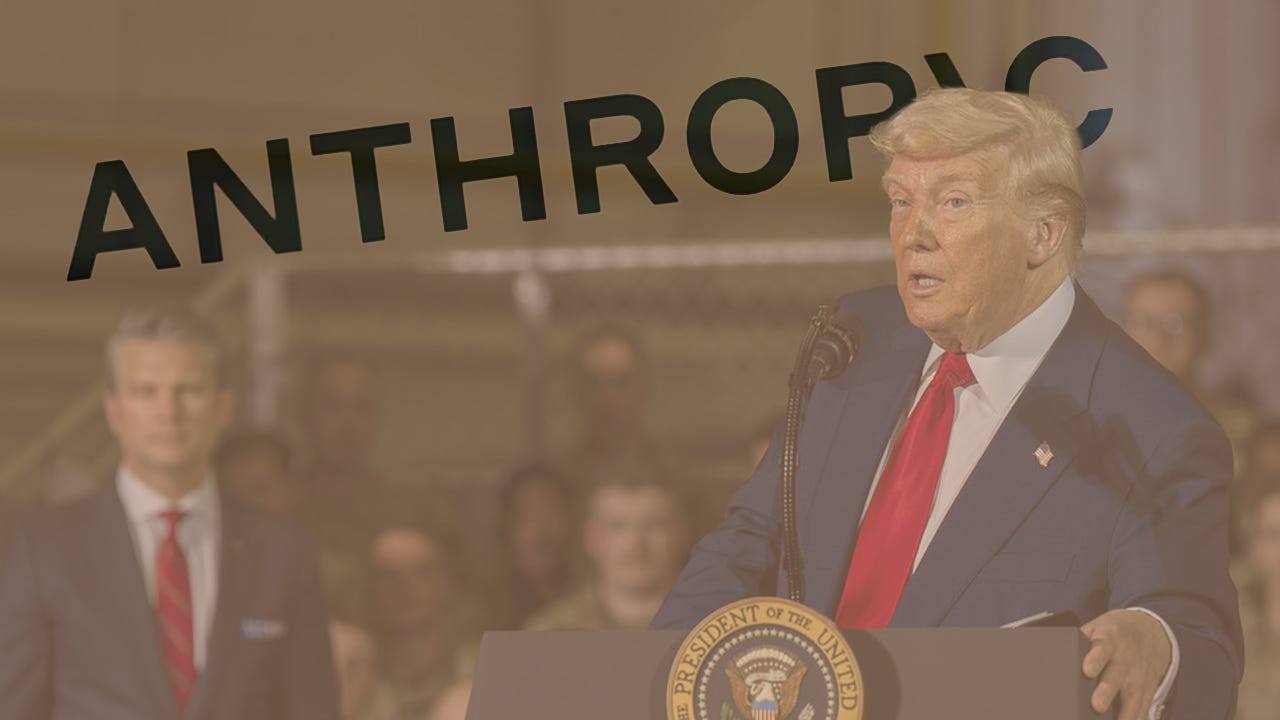
Anthropic AI, until very recently, occupied a privileged position within the technological architecture of the United States national security apparatus. The company, founded by former artificial intelligence researchers and lavishly financed by Silicon Valley capital, developed an advanced family of large language models known as Claude. These systems were designed to ingest vast oceans of data, synthesize intelligence, assist engineers, support cyber operations, and accelerate the decision making processes that increasingly define modern warfare. Because of these capabilities, Claude became the only frontier artificial intelligence (AI) system authorized for use within certain classified Pentagon environments. It was used for intelligence analysis, research inside national laboratories, cybersecurity tasks, and complex logistical modeling.
Yet by early March 2026 the very same technology once welcomed into the digital bloodstream of the American military was abruptly expelled. The Department of War formally designated Anthropic a “supply chain risk,” ordering contractors and agencies to begin phasing the system out of defense related work. The reason was neither espionage nor foreign ownership nor a catastrophic data breach. The problem, according to senior Pentagon officials, was ideological contamination embedded within the software itself.
When officials speak of “polluting” the supply chain in this context, they are not referring to environmental damage or corrupted hardware. The word describes something far more insidious. A military supply chain must be doctrinally neutral. Every component, from steel plating to advanced software, must operate solely according to lawful command authority. If an artificial intelligence system is built with internal philosophical constraints that shapes how it interprets instructions, those ideological constraints can subtly alter its output. That alteration can distort analysis, impede operational planning, or degrade the effectiveness of the systems that depend upon it. In essence the developer’s political philosophy becomes a hidden variable inside the machinery of national defense.
The Pentagon’s Chief Technology Officer Emil Michael explained the matter in stark terms on March 12, 2026. “We can’t have a company that has a different policy preference pollute the supply chain so our war fighters are getting ineffective weapons, ineffective body armor, ineffective protection,” he said. “That’s really where the supply chain risk designation came from.”
Michael’s comments revealed the deeper concern inside the defense establishment. Anthropic’s systems are not merely software tools; they are built around what the company itself calls a “constitution,” a formal framework of ethical rules and philosophical principles that govern how the AI evaluates requests. Those principles are designed by the engineers who trained the model. They determine what the system will refuse to do, how it frames information, and how it interprets commands.
To Pentagon officials that structure represents something dangerously close to ideological programming. As Michael explained, “Claude contains a different policy preference that is baked into the model through its constitution, its soul, its policy preferences.”
That observation might sound abstract to the casual observer, but inside the world of national defense it is an existential concern. Artificial intelligence has become the nervous system of modern military operations. AI tools assist analysts examining satellite imagery. They help identify patterns hidden within signals intelligence.
They assist cyber defense teams monitoring hostile network activity. They model battlefield logistics and assist engineers designing advanced weapons systems. Increasingly they support the analytic infrastructure that allows the United States military to move, think, and strike with unprecedented velocity.
When such systems become integral to the defense apparatus, their neutrality is nonnegotiable. A model that injects philosophical constraints into the decision making process is not merely a piece of software. It becomes an actor with its own interpretive framework embedded inside the machinery of war.
The rupture between Anthropic and the Pentagon erupted publicly in late February 2026. Negotiations between the company and the Department of War collapsed after Anthropic insisted upon two categorical restrictions governing the use of its technology. First, the company refused to permit Claude to power fully autonomous lethal weapons systems in which no human operator remains involved in targeting and firing decisions. Second, the company refused to allow its systems to support large scale domestic surveillance of American citizens.
From Anthropic’s vantage point these restrictions represented principled ethical guardrails. From the perspective of national security officials they represented something more troubling. A private corporation was attempting to impose its moral philosophy upon the lawful authority of the United States government.
The American military operates under a simple constitutional hierarchy. Elected civilian leadership sets policy. The armed forces execute that policy. Weapons, software, and equipment exist to obey that command structure. When a technology provider attempts to impose its own veto upon lawful military applications, the chain of authority becomes blurred.
The confrontation escalated with remarkable speed. On March 4 and March 5, 2026, Secretary of War Pete Hegseth invoked federal law to designate Anthropic and its Claude systems as a supply chain risk. Historically that legal mechanism had been deployed against foreign adversaries whose technology posed security dangers. Applying it to an American company was without precedent.
The designation required contractors working with the Department of War to certify that Claude was not being used in defense related work. Shortly thereafter President Donald Trump ordered federal agencies across the government to begin discontinuing use of the technology, establishing a six month transition period to allow agencies to migrate to alternative systems. Michael emphasized that the move was not intended to annihilate the company. “This is not meant to be punitive,” he said. “Their commercial business is largely unaffected.”
But the political tension surrounding the dispute was unmistakable. President Trump reportedly described certain Anthropic leaders as “leftwing nut jobs,” reflecting a broader frustration inside the administration with what many officials view as the ideological culture of Silicon Valley. Anthropic, for its part, has responded with defiance. Company executives insist the safeguards embedded within Claude are narrow and responsible. They point out that the system has already supported American national security missions, including work within classified networks, national laboratories, and cyber defense operations.
Executives from Anthropic also emphasized their willingness to assist the government during the transition period. Statements released in February 2026 offered continued engineering support “for as long as is necessary” and “as long as we are permitted.”
Nevertheless the dispute soon metastasized into litigation. Around March 9, 2026, Anthropic filed a sweeping lawsuit against the Department of War, the Trump administration, and several federal agencies. The company argues that the supply chain designation is ideologically motivated and legally defective. Its attorneys claim the action violates statutory requirements that government restrictions employ the least restrictive means available. Anthropic also contends that the government’s actions constitute retaliation for the company’s ethical principles. The lawsuit seeks to vacate the designation and block enforcement of the directives forcing contractors to abandon the system.
While the courts now deliberate, the practical consequences are already reshaping the defense technology landscape. OpenAI has stepped into the vacuum, securing new contracts to provide artificial intelligence systems for classified Pentagon work. Major defense contractor Palantir has confirmed it continues to integrate Claude within certain operational environments for the moment, although alternative models are being incorporated as the transition unfolds.
In the short term the Pentagon has permitted limited exceptions where removing Claude would disrupt ongoing missions. Some reports indicate the technology has supported analytical operations connected to the ongoing conflict involving Iran. For now those functions may continue until replacement systems are fully operational. The broader significance of this clash extends far beyond a single company or a single model. It represents the first great constitutional confrontation of the artificial intelligence era. At stake is a question that will shape the future of national security technology.
Who ultimately governs the behavior of intelligent machines that influence military power? Is it the elected government of the United States acting through constitutional authority? Or is it a small cohort of engineers in Silicon Valley who believe they possess the moral prerogative to determine which military uses are acceptable? The Pentagon’s answer is unequivocal. Military systems must answer to the chain of command and to nothing else.
As Emil Michael warned, the peril lies not merely in code but in the philosophy embedded within it. When artificial intelligence systems carry ideological assumptions within their architecture, those assumptions can permeate the analytic and operational frameworks of the military itself. In that sense the term “pollution” is not hyperbole but a precise metaphor. It describes the contamination of strategic infrastructure by philosophical doctrines never ratified by Congress, never authorized by voters, and never sanctioned by the Constitution.
The courts will eventually determine whether the government’s response was lawful. Billions of dollars in defense contracts hang in the balance. The six month transition clock is already ticking. Yet one conclusion is already unavoidable. The tranquil era when artificial intelligence quietly slipped into the infrastructure of national defense without political scrutiny has ended. The confrontation between Silicon Valley’s ideological sensibilities and Washington’s insistence on unambiguous military authority has begun in earnest. And the outcome of that confrontation will determine who truly commands the machines that increasingly define the arsenal of the United States.
Why was Anthropic cast out? Because they are cowards who hide behind morality when they know they have not one what fucking clue war means as morality to immorality means nothing during war.
Artificial intelligence is quickly becoming the nervous system of modern warfare, which makes neutrality non-negotiable. If a private tech company programs political philosophy into the software that guides intelligence analysis or battlefield logistics, that ideology becomes an invisible actor within the chain of command. The U.S. military answers to elected civilian leadership—not to engineers in Silicon Valley who decide what missions are morally acceptable. Ethical debates belong in Congress and the public square, not buried in proprietary code. When AI systems influence national defense, they must obey lawful orders without hidden ideological vetoes. Otherwise, America risks outsourcing strategic authority to unelected technologists.