


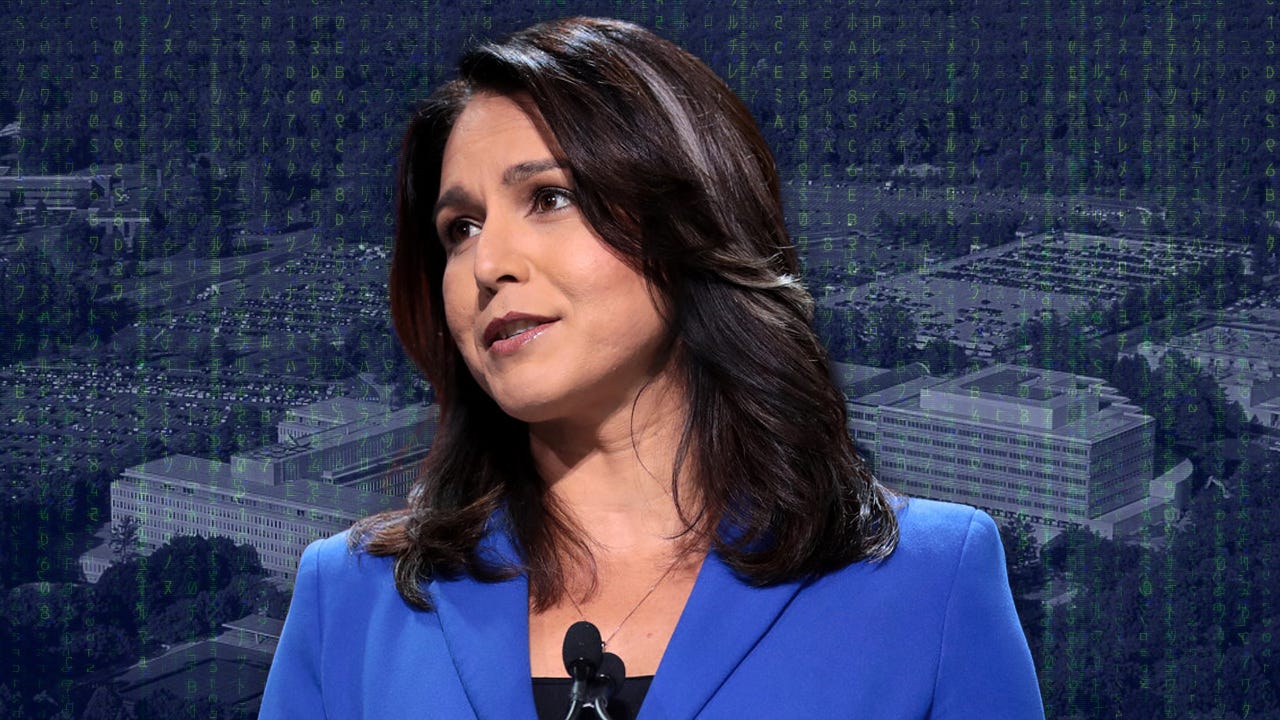
Tulsi Gabbard is one of the most unusual and controversial figures ever to ascend to the apex of the American intelligence apparatus. A former Democratic congresswoman from Hawaii, combat veteran, Lieutenant Colonel, and former presidential candidate who publicly broke with her own party over war, surveillance, and the sprawling national security bureaucracy, Gabbard spent years condemning the intelligence establishment before ultimately becoming Director of National Intelligence (DNI) under President Donald Trump. Her appointment alone sent seismic tremors through Washington’s permanent ruling class. Yesterday those tremors erupted into a political earthquake after allegations exploded across Capitol Hill and conservative media that the Central Intelligence Agency (CIA) had removed highly sensitive files from the Office of the Director of National Intelligence (ODNI) during an escalating confrontation over the declassification of records involving the assassination of President John F. Kennedy and the infamous MKUltra mind control program.
The controversy erupted publicly after reports circulated during Jesse Watters’ broadcast on Fox News on May 13, 2026. Watters stated that CIA personnel had effectively “raided” Gabbard’s office and removed dozens of boxes of classified records reportedly being prepared for public release. According to the claims aired on television and amplified across social media, the records included materials tied to the Kennedy assassination, covert CIA operations, and MKUltra, the notorious Cold War era program in which the agency conducted experiments involving LSD, hypnosis, psychological conditioning, and other forms of behavioral manipulation.
The story detonated instantly because of its staggering implications. Tulsi Gabbard is not merely another cabinet official. As Director of National Intelligence she oversees the broader Intelligence Community, including coordination among the CIA, The National Security Agency (NSA), The Defense Intelligence Agency (DIA),and numerous other agencies. For the public to hear allegations that the CIA had entered the orbit of the DNI and removed records under dispute created the appearance of an internal war inside America’s intelligence hierarchy itself.
The controversy intensified further due to testimony reportedly connected to CIA whistleblower James Erdman, who allegedly informed Senate investigators that approximately forty boxes of documents had been seized from ODNI custody while undergoing declassification review. According to accounts circulating among congressional investigators and conservative journalists, those files were being processed for release pursuant to President Trump’s renewed push for maximum transparency regarding historical intelligence abuses. The implication was unmistakable. Critics of the CIA immediately suspected that elements within the agency were attempting to prevent disclosure of material that could humiliate current and former officials or expose decades of deception surrounding politically radioactive subjects.
Representative Anna Paulina Luna of Florida became one of the most aggressive public voices on the matter. Luna has emerged as a leading advocate for declassification efforts involving JFK, RFK, MLK, intelligence abuses, and covert operations. She publicly stated that she had been informed that documents under ODNI jurisdiction had been taken by the CIA and warned that if the records were not returned Congress could pursue subpoenas. Her remarks dramatically escalated the story because they granted congressional credibility to what otherwise might have been dismissed as internet rumor or political theater.
However, the details became murkier as the day progressed. Gabbard’s office categorically denied that the CIA had “raided” the Office of the Director of National Intelligence. DNI press secretary Olivia Coleman issued a public statement declaring that the reports were false. Luna herself later clarified that the event did not occur literally on May 13, 2026 and that the word “raid” may have been imprecise. Intelligence officials speaking anonymously to media outlets likewise insisted there had been no forcible seizure or dramatic confrontation. Yet notably, the clarifications stopped short of fully denying that disputed documents had been removed from ODNI control at some earlier point.
That distinction is critically important because the core issue is not whether armed CIA officers stormed Tulsi Gabbard’s office like a scene from a political thriller. The underlying issue is the alleged struggle over who controls historically explosive intelligence records and whether factions inside the national security bureaucracy are resisting Trump administration declassification efforts.
To understand why this matters, one must understand the central role the CIA plays in both controversies. The Kennedy assassination remains perhaps the most scrutinized intelligence related event in American history. Despite decades of investigations, public skepticism persists because thousands of records remained classified or partially redacted for generations. Many researchers believe elements of the intelligence community concealed information about Lee Harvey Oswald’s contacts, CIA surveillance activities, anti Castro operations, and intelligence failures before the assassination. Even when documents have been released, heavy redactions and missing files have fueled suspicion rather than trust.
MKUltra is equally incendiary. Beginning in the 1950s, the CIA conducted secret experiments exploring methods of mind control, interrogation resistance, chemical manipulation, and psychological conditioning. Subjects were sometimes dosed with LSD or subjected to experiments without informed consent. Congressional investigations in the 1970s exposed aspects of the program, but many records had already been destroyed on orders from CIA leadership. The surviving revelations permanently stained the agency’s reputation and transformed MKUltra into shorthand for unchecked clandestine power operating in the shadows of government.
Tulsi Gabbard’s role in this unfolding drama is particularly significant because she has long positioned herself as hostile to regime change operations, secret wars, and intelligence excesses. Throughout her political career she repeatedly accused elements of the national security establishment of misleading the American people and perpetuating endless foreign conflicts. Her appointment by President Trump was therefore viewed by many intelligence veterans as akin to placing an institutional skeptic atop the intelligence pyramid itself.
This broader context explains why conservatives and anti establishment figures interpreted yesterday’s reports as evidence of Deep State resistance. To them, the dispute symbolizes a larger battle between elected officials seeking transparency and entrenched intelligence bureaucracies determined to protect institutional secrets. The allegations also dovetail with broader claims made this year by whistleblowers involving CIA obstruction concerning investigations into the origins of the coronavirus, surveillance of congressional investigators, and internal classification disputes.
At present, many aspects of the story remain contested and unresolved. No publicly released evidence confirms a dramatic physical raid in the literal sense. Yet multiple figures connected to congressional oversight and whistleblower channels continue asserting that disputed records involving JFK and MKUltra were removed from ODNI custody during a sensitive declassification process. The distinction between “raid” and “custodial dispute” may ultimately prove more semantic than substantive depending on what facts emerge in the coming days.
What happens next could become enormously consequential. Congress may issue subpoenas. Additional whistleblowers could emerge. Tulsi Gabbard herself may eventually speak publicly in greater detail. CIA Director John Ratcliffe may be forced to clarify the agency’s actions. Most importantly, the controversy has once again focused national attention on the enduring secrecy surrounding America’s intelligence agencies and the historical episodes that continue to haunt them decades later.
The American people are witnessing a spectacle that resembles less a bureaucratic disagreement than an invisible civil war inside the architecture of the national security state. At the center stands Tulsi Gabbard, the former Democratic insurgent turned Trump intelligence chief, now seemingly locked in a confrontation with the very institutions she spent years condemning from the outside.
The attacks on Tulsi Gabbard are not random. They are defensive fire from a bureaucracy that has spent decades hiding files, laundering narratives, and calling secrecy “national security.” Whether the CIA literally “raided” ODNI or fought a custodial war over explosive records, the core question remains: who owns the truth—the people, or the intelligence cartel? Tulsi stands in the blast zone because she represents civilian control, transparency, and service over institutional self-protection. That is why the Deep State and its useful idiots howl. A decorated soldier threatening the vault is their nightmare. America should want her opening it.
“I will splinter the CIA into a thousand pieces and scatter it into the winds” ~ John F. Kennedy