


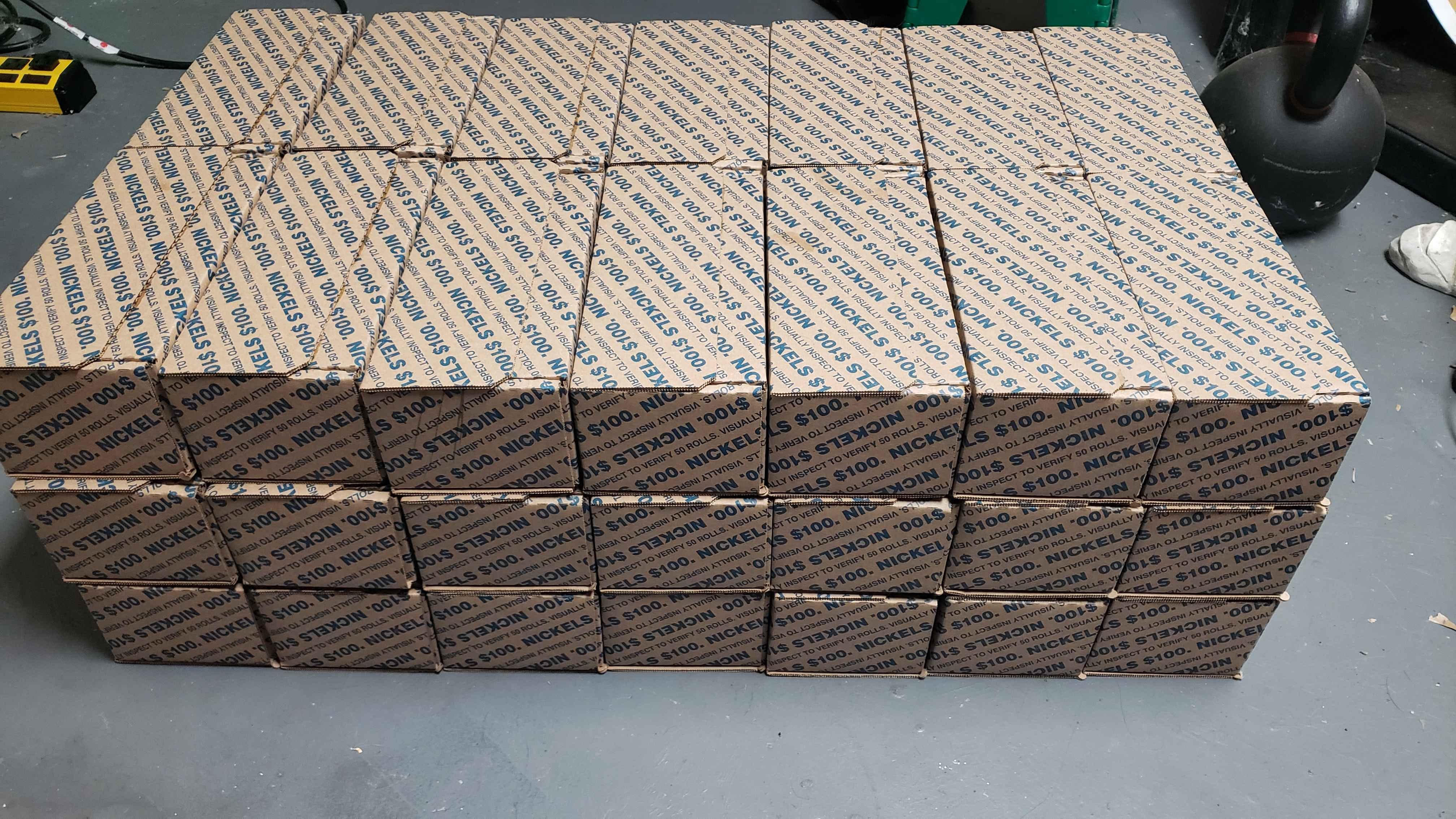
The U.S. nickel has been the Mint’s quiet nightmare, the raw melt of these coins is very simple math, now costing 13.78 cents to produce and distribute, it’s worth more as scrap than money, a financial loss per coin that’s been transpiring since 2006, exposing the government’s relentless fiscal waste.
The humble nickel has become a casualty of the green energy boom, surging cost of materials stemming from skyrocketing prices for its core metals, 75% copper and 25% nickel, driven by global demand in EV batteries. With ~67 million EVs produced worldwide to date (through Q3 2025), 17.3 million in 2024 alone, and >20 million projected for 2025, burning millions of taxpayer dollars all while the purchasing power of this coin dwindles to near-worthlessness.
The process with which the U.S. Mint follows to produce nickels year-round at its Philadelphia and Denver facilities, is automated but highly tedious, involving some 300–400 employees across circulating coins, with 100–150 of these individuals directly on nickel runs. With all those employees working on the nickel, the Mint still lost $17.7 million on 112.8 million coins in 2024, the 19th straight year of no accountability wasteful spending.
To clearly contrast, a profit is possible, dimes cost just 5.76¢ to make but carry a 10¢ face value delivering the Mint a tidy 4.24¢ profit per coin. This nickel nightmare didn’t happen overnight, but ballooned due to rising metal prices, driven by demand for copper and nickel in EV batteries which continue to push the price per piece higher, and higher each year. This is not just a simple fix, the Mint just can’t switch materials without new laws, it’s bound to the 1965 Coinage Act that requires Congressional approval. Vending machines, parking meters, and cashier drawers still demand massive amounts of these coins, so the losses keep multiplying.
Intensifying this inertia, the U.S. Mint lacks an official PAC, federal rules bar agencies from such fundraising, and policy sway falls to neutral lobbies like the American Numismatic Association, leaving DOGE’s efficiency drive stonewalled. Bottom line, these losses pile up to tens of millions in taxpayer waste annually, funds that could build schools or repair roads. Critics point to Canada, which ditched pennies in 2012, saving $11 million per year via 5-cent rounding with no economic fallout. In the U.S., penny production ends in 2026, saving $56 million per year, and the nickel should follow. While DOGE flexes its legislative muscle, the nickel’s saga rolls on.
On January 20, 2025, his first day back in office, President Trump formed the Department of Government Efficiency (DOGE) via executive order, a short-term advisory group, ending July 4, 2026, and rebuilt from the U.S. Digital Service. Aimed at $2 trillion in cuts, DOGE achieved wins like exposing Social Security fraud (e.g., payments to deceased individuals) and rolling back business regulations, claiming $205 billion saved by August 2025.
Yet it never touched the nickel, blocked by the 1965 Coinage Act, the Mint’s lack of lobbying power, and internal chaos. Elon Musk served 130 days, departing May 29, 2025, amid intense scrutiny from Senators Elizabeth Warren and Ron Wyden. While Musk entered with clear intent to cut waste and modernize government, the senators unleashed a firestorm over his unelected authority, potential conflicts, and compliance with Senate confirmation rules concerns that fueled a partisan backlash and crippled DOGE’s mission.
The coin’s enduring paradox, 5 cents in name– nearly three times that in cost, exposing deeper governmental dysfunction, where commodity spikes and legal rigidity, like the 1965 Coinage Act, beat more common sense driven solutions by using cheaper metal or rounding to 10¢. Just this year, the U.S. finally followed suit by halting penny production, in May 2025, the Treasury placed its last order for penny blanks, with the Mint set to cease manufacturing by early 2026, saving an estimated $56 million annually after years of 3.7-cent losses per coin.
The nickel should follow suit, its melt value already exceeds 6 cents, and phasing it out with similar rounding to the nearest dime could reclaim tens of millions more for taxpayers. Experts push for cash-back incentives or slow elimination, but Washington’s traditions won out, for now. Every time you hear nickels jingle in your pocket, remember, real fixes need Congress, not taxpayer subsidy. Until then, the nickel will keep rolling, at taxpayers’ expense.
I would suggest that another factor caused this problem: The weakening of the dollar. This is the same problem the Holy Roman Empire faced about 2000 years ago, when the "solution" was to clip the coins, so that the quantity of valuable metal in the coin was reduced.
An additional factor is that the world's largest supplier of nickel is Russia. Most US allies have had sanctions against Russia for the past 4 years. This has reduced the free supply of nickel available to those nations.
First it was the Penny, and now the nickel, and what’s next…
And funny how in an age of surveillance no one can figure out who the real Bitcoin inventor is and what happened to him..
Erode the old system and usher in the new and the control and enslavement gov’t wants is here..
Nothing new under the sun..