


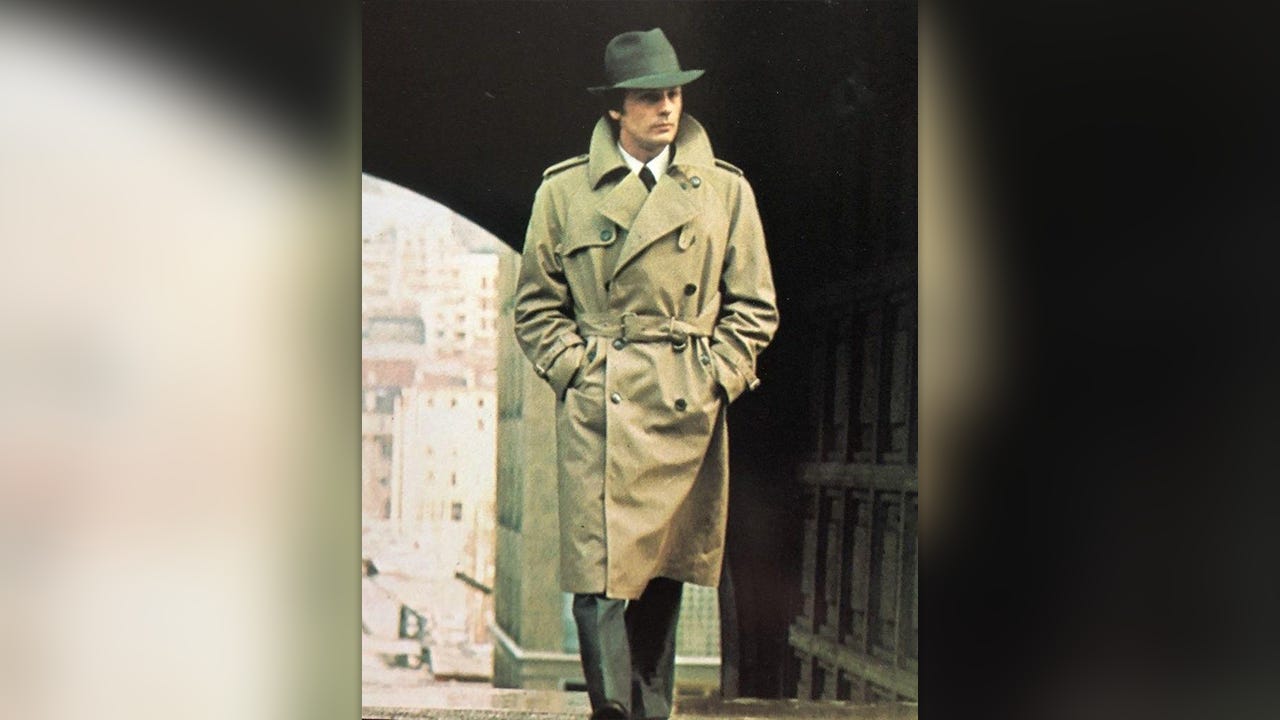
The trench coat stands as one of fashion’s most enduring icons, a timeless blend of refined elegance, sophisticated precision, and rugged practicality. Its enduring appeal lies in its seductive harmony—functional yet effortlessly stylish, versatile enough for rain-slicked city streets or candlelit evenings, instantly recognizable, and always whispering of hidden depths and quiet intrigue the world over. As actors Humphry Bogard, David Nivid, and Micheal York proved, no man does not look dashing in this military inspired all weather coat.
The cinched waist teases hidden curves, the wide lapels frame a knowing gaze, and the long hem sways with the promise of secrets concealed beneath perfectly tailored lines. Its origins are deeply rooted in 19th-century advancements in waterproof fabrics, which revolutionized outerwear by providing reliable protection against the elements without the bulk, weight, or discomfort of earlier garments.
The invention of the trench coat is often debated between two British luxury brands, Burberry and Aquascutum. Aquascutum claims its roots go back to the 1850s, when founder John Emary patented a waterproof wool fabric called Aquascutum, Latin for “water shield.” The company supplied raincoats to British officers during the Crimean War (1853–1856), helping establish an early claim to the style. This long-standing rivalry illustrates how the trench coat developed from several parallel advances in fabric technology.
The story of the trench coat begins in the early 19th century, when Scottish chemist Charles Macintosh patented his groundbreaking waterproof rubberized fabric in 1823. By dissolving natural rubber in naphtha (derived from coal tar) and sandwiching it between layers of cloth (initially wool, later cotton), he created the first truly effective, lightweight waterproof material—known as the “mackintosh” or “mac.”
These early raincoats quickly found use in civilian life and among military officers for activities like riding, hunting, and campaigning, setting the stage for more refined weatherproof clothing. They marked a major leap forward from traditional heavy oiled or waxed fabrics, though they had drawbacks like stiffness in cold, stickiness in heat, and a persistent odor.
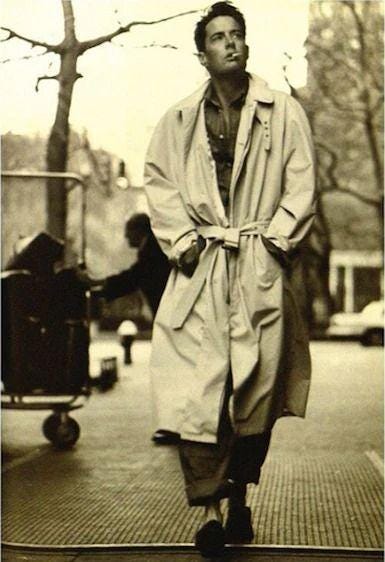
By the mid-19th century, British clothiers built on these innovations to meet growing military demands for functional, lighter alternatives to the cumbersome wool greatcoats of the Napoleonic and Crimean eras. In the 1850s, Aquascutum patented and popularized breathable waterproof wool fabrics, supplying officers during conflicts like the Crimean War with more practical raincoats, early precursors to the trench style.
Thomas Burberry followed in 1856, founding his company and inventing gabardine in 1879: a tightly woven, breathable twill (typically cotton or worsted wool) proofed strand by strand for superior water resistance without sacrificing ventilation.
Burberry submitted officer raincoat designs to the War Office as early as 1901, incorporating features like double-breasted fronts and adjustable belts. Beneath its khaki veil and rigid shoulders lies a quiet temptation, forged in the demands of war, yet refined into an instrument of seduction, each loosened button a subtle confession.
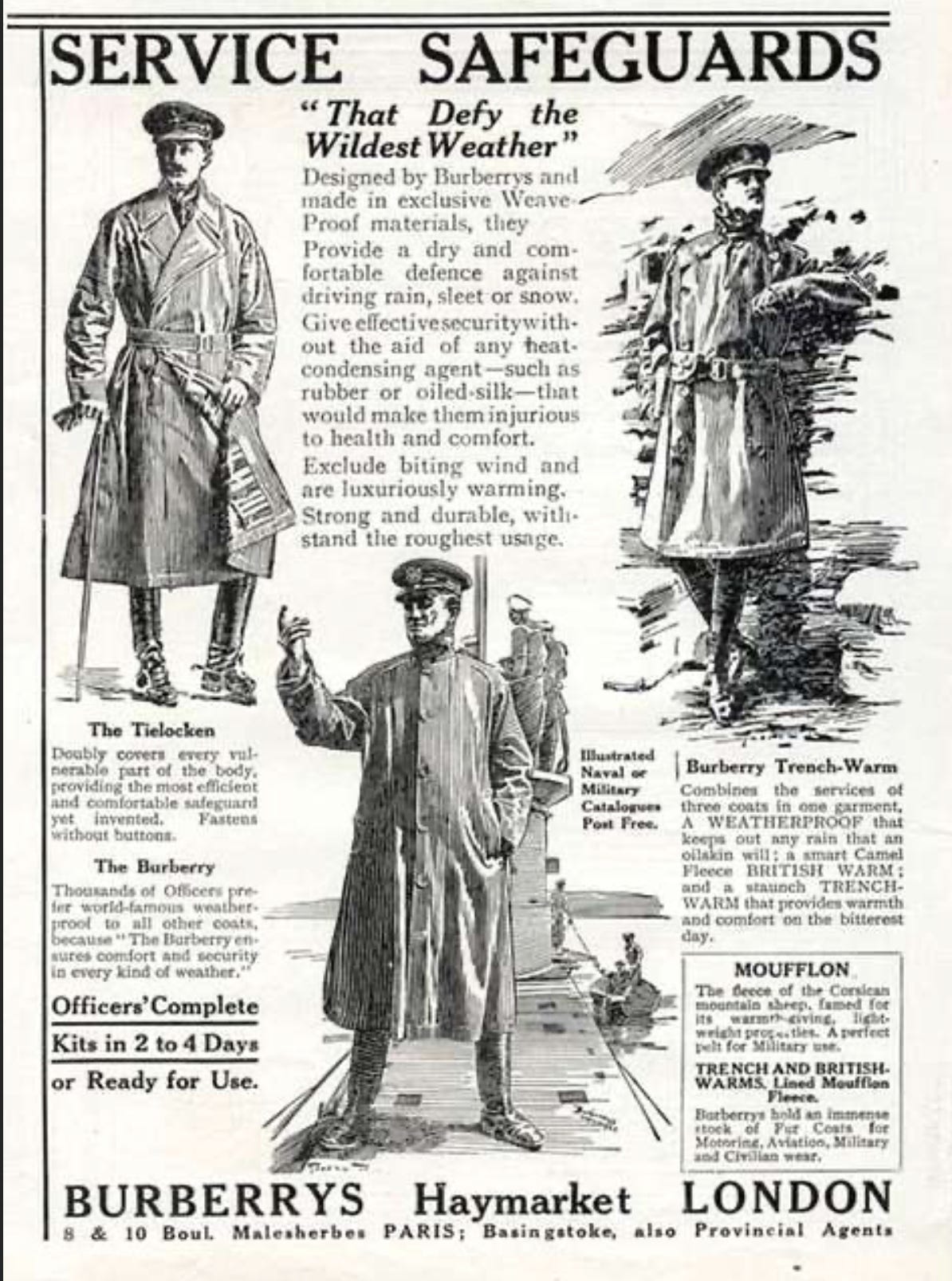
The true peak culmination of the modern trench coat came during World War I (1914–1918). In the muddy, rain-soaked trenches of the Western Front, traditional greatcoats proved disastrously heavy, sodden, and restrictive—soldiers sometimes hacked off excess fabric with bayonets for mobility. British officers, who purchased their own kit privately (as these were not regulation issue for enlisted men), turned to Aquascutum and Burberry for tailored solutions.
These coats evolved into the recognizable form: khaki gabardine construction, double-breasted with 10 buttons, wide lapels, raglan sleeves, epaulettes (for rank insignia), storm flaps (to channel rain away from shoulders), gun flaps, D-rings on the belt (for maps, binoculars, or gear), cuff straps, and deep pockets. The lighter weight, better breathability, and weather resistance made them ideal for trench conditions, earning the nickname “trench coat” from widespread frontline use.
Popularity for these classic garments exploded in the interwar years and beyond, this military necessity laid the firm foundation for its postwar transformation into an iconic civilian fashion piece. Returning officers continued wearing their trench coats, introducing the style to everyday life.
Amplified by Hollywood glamour: Humphrey Bogart’s brooding, rain-drenched silhouette in Casablanca (1942), exuding dangerous charisma beneath the collar’s shadow; Audrey Hepburn’s gamine grace in Breakfast at Tiffany’s (1961), transforming military utility into feminine mystique; and countless spies, detectives, and femme fatales who wielded the coat as both armor and invitation. The storm flap drapes across the chest like a whispered confidence, protecting what lies beneath while subtly accentuating every breath and shift of posture.
The trench coat was never standard issue for enlisted men. British officers, favored the fashion, and primarily drawn from the upper classes—purchased these premium garments privately from elite outfitters like Burberry and Aquascutum, who supplied them without formal mass contracts but through longstanding ties to the military establishment.
What began as an upper-class privilege, reserved for officers who could afford the private purchase, transformed postwar into a national emblem of intrigue. As the war demanded promotions from lower ranks, those fleeting “temporary gentlemen,” the allure of owning one only grew, cementing its status as a symbol of quiet authority and hidden elegance.
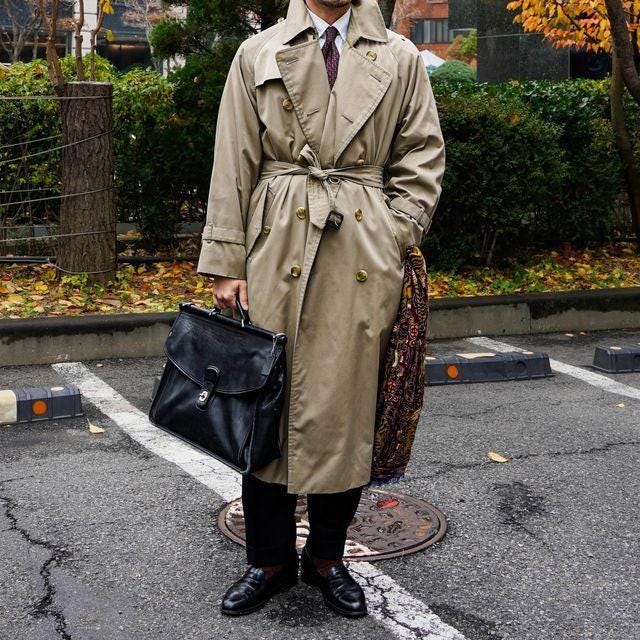
Tracing its wide lapels and storm flap, the coat exhales a veiled seduction: forged in the brutal anvil of war, yet chiseled for the ceremony of allure, where every fold and fastener invites a calculated peek into hidden realms. No self-respecting spy would be caught without a trench coat.
Today, the trench coat endures as a tantalizing wardrobe essential, exuding an aura of understated sophistication, effortless adaptability through the sultry whispers of changing seasons, and an intoxicating bond to its raw, heroic origins forged in the heat of battle. From the muddy trenches to the dimly lit streets of desire, it has morphed into a seductive canvas for self-expression, adored by those who crave its chameleon-like prowess, draping over rain-slicked pavements by day, then teasing the curves of twilight soirées by night.
In its deepest essence, it surpasses mere legacy: it is a provocative promise of impenetrable protection laced with dangerous allure, of hushed power that veils secrets while slowly, deliberately, baring the soul. Slide into its embrace, draw the belt tight against your form like a lover’s grasp, and surrender to its hypnotic allure; the world may gaze upon you, but the passions it ignites beneath remain a private inferno.
The true well-dressed gentleman understands the added panache of loosely tying the trench coat belt, as opposed to buckling it as one normally would with a belt.
LOL, Roger, kudos. You managed to make a fundamentally dull subject both interesting and hilarious. Seriously, my fedora is off to you. So, are you selling these yet? A lady has been after me to buy a trench coat for years.
Excellent writing, Roger - as always - and with a history lesson too…..GM