


“Politics is show business for ugly people”
- Roger J. Stone
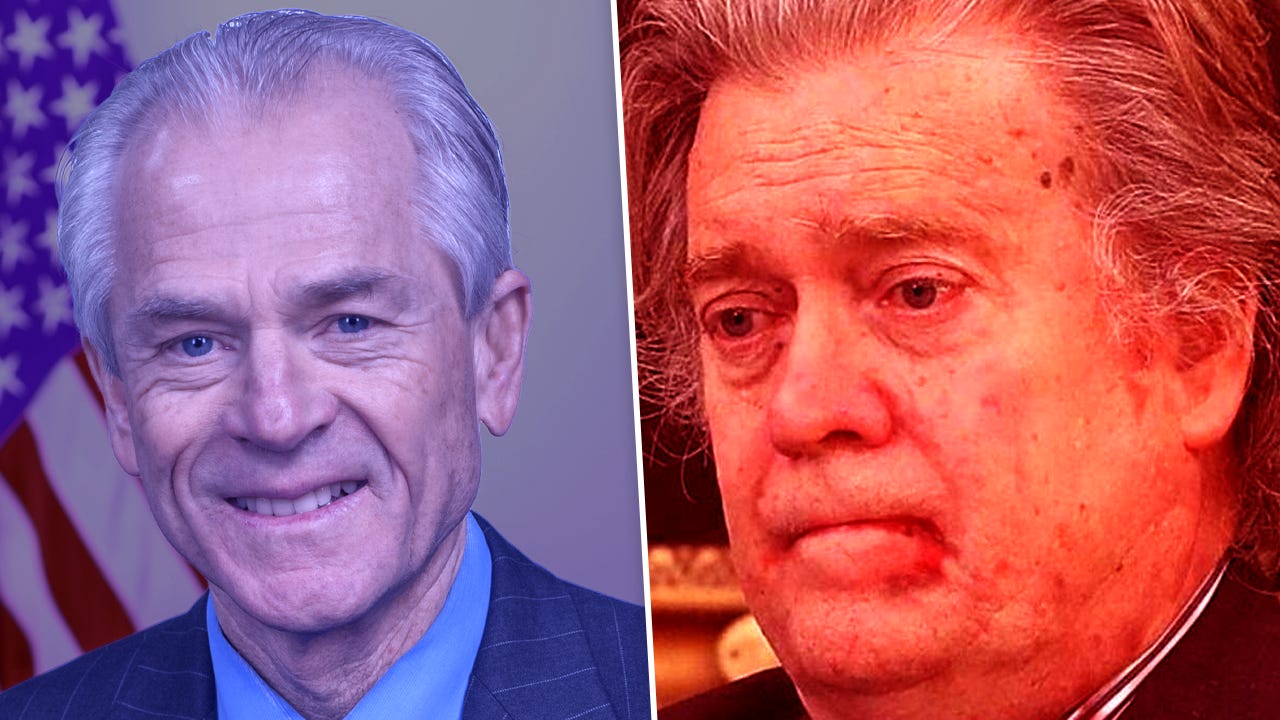
There are moments in American political life when pretense parades as principle and spectacle supplants substance. The saga of Steve Bannon and Peter Navarro stands as a vivid illustration of that inversion, a study in contrast where calculated defiance is confused for courage and genuine consequence is overshadowed by theatrical self promotion.
Steve Bannon cultivated an image of embattled populist martyrdom, but his conduct reflects something far more performative than principled. His contempt of Congress citation became a stage upon which he constructed a narrative of persecution, a carefully choreographed production designed to amplify his profile rather than resolve his legal obligations. His brief imprisonment was transformed into a curated spectacle of contrived courage, a display designed to persuade the public that he was enduring something noble rather than something avoidable.
The key point is straightforward. He could have simply asserted his Fifth Amendment rights, appeared, and fulfilled his legal obligations as General Michael Flynn and myself among others did. Instead, he chose confrontation over compliance and crafted an image of resistance that relied heavily on omission and theatrics. That decision was neither courageous nor compelled. It was calculated.
Bannon’s broader record compounds the concern. He has been associated with multiple high profile fundraising efforts and ventures that drew scrutiny, including the fraudulent “We Build the Wall” initiative, which resulted in federal charges later mooted by a presidential pardon, and subsequent state level proceedings in New York that ended in a plea agreement without incarceration. These episodes, alongside his involvement in media ventures and financial enterprises tied to controversial figures and complex funding structures, contribute to a portrait that critics argue reflects opportunism rather than integrity.
His associations have also drawn sustained public attention. Reports have documented his past interactions with Jeffrey Epstein in a media advisory capacity during 2017 to 2019, a relationship that has been widely criticized given Epstein’s criminal history. While not criminally charged in connection with that association, the proximity itself has raised questions about judgment and discernment.
At the same time, Bannon benefited from legal and political circumstances that allowed him to avoid extended incarceration. He was pardoned in 2021 for federal charges related to fundraising activities, and later resolved state charges through a negotiated plea that resulted in a conditional discharge rather than prison time. The pattern is unmistakable. He repeatedly navigated perilous legal terrain without suffering the full weight of the consequences that others in similar situations endured.
Contrast this with Peter Navarro, an economist and policy advisor whose approach was markedly more distinguished in tone and outcome. Navarro did not transform his legal predicament into a media spectacle. His imprisonment was not stylized or staged. It was direct, punitive, and real. Where Bannon cultivated an image, Navarro absorbed a sentence.
The disparity becomes even more striking when viewed alongside the precedent of Eric Holder, who was held in contempt of Congress in connection with the Obama era Fast and Furious scandal and yet never even saw the inside of a holding cell. The uneven application of enforcement in these cases reveals a troubling inconsistency that undermines confidence in equal justice.
Bannon’s defenders portray him as a populist provocateur willing to challenge institutional overreach. His critics describe a far less flattering figure, one defined by self promotion, selective defiance, and an uncanny ability to transform legal jeopardy into personal publicity. Even his public persona, often deliberately disheveled and dismissive of convention, reinforces the image of cultivated chaos rather than disciplined conviction.
Navarro, by contrast, is widely regarded as intellectually rigorous and policy driven. His supporters emphasize his academic credentials and substantive contributions, arguing that his punishment reflects not performance but prosecution. The juxtaposition is difficult to ignore. One man dramatized defiance and avoided enduring consequences. The other complied with the process as it unfolded and faced imprisonment.
At the center of this entire controversy is a simple and undeniable reality. Steve Bannon did not testify. He chose not to engage through established legal channels available to him in an effort to create an image of a political prisoner. He declined the path taken by others who asserted constitutional protections while still appearing. That choice defined the outcome that followed and shaped the narrative he later promoted.
The American system depends on consistency, credibility, and clarity. When enforcement appears selective and outcomes diverge so dramatically among similarly situated figures, public trust erodes. The Bannon episode illustrates how spectacle can obscure substance, while the Navarro case demonstrates how consequence can fall unevenly.
In the final analysis, the distinction remains clear. One sleazy man mastered the art of political theater. The refined gentleman experienced the reality of legal consequences.
Let’s call it what it is: Steve Bannon knows how to work a camera better than a courtroom. He turned legal exposure into a branding exercise, and too many people bought it. Meanwhile, Peter Navarro took the system head-on and paid the price without theatrics. That’s the difference between performance and consequence. The bigger problem? A justice system that looks wildly inconsistent depending on who you are and how you play it. Americans aren’t stupid—they see the double standards. If accountability depends on optics and connections, then justice isn’t blind—it’s negotiated.
Boy does my family understand the difference between performance and reality. The consequences are heavy.
My husband served four months with Peter Navarro (part of the lawfare four month club) for a wholly made up “crime” never before or since prosecuted. The reality is my husband is the top digital marketing fundraiser for Trump Inc so he among the top billing targets on the Biden enemies list.
Very, very grateful to political legends like Roger Stone for telling the unvarnished truth about this dark chapter in our nations history.
I’m prayerfully hopeful we and so many others will be vindicated, see these outrageously unjust malicious prosecutions overturned and be made whole financially and otherwise.
That’s justice.