


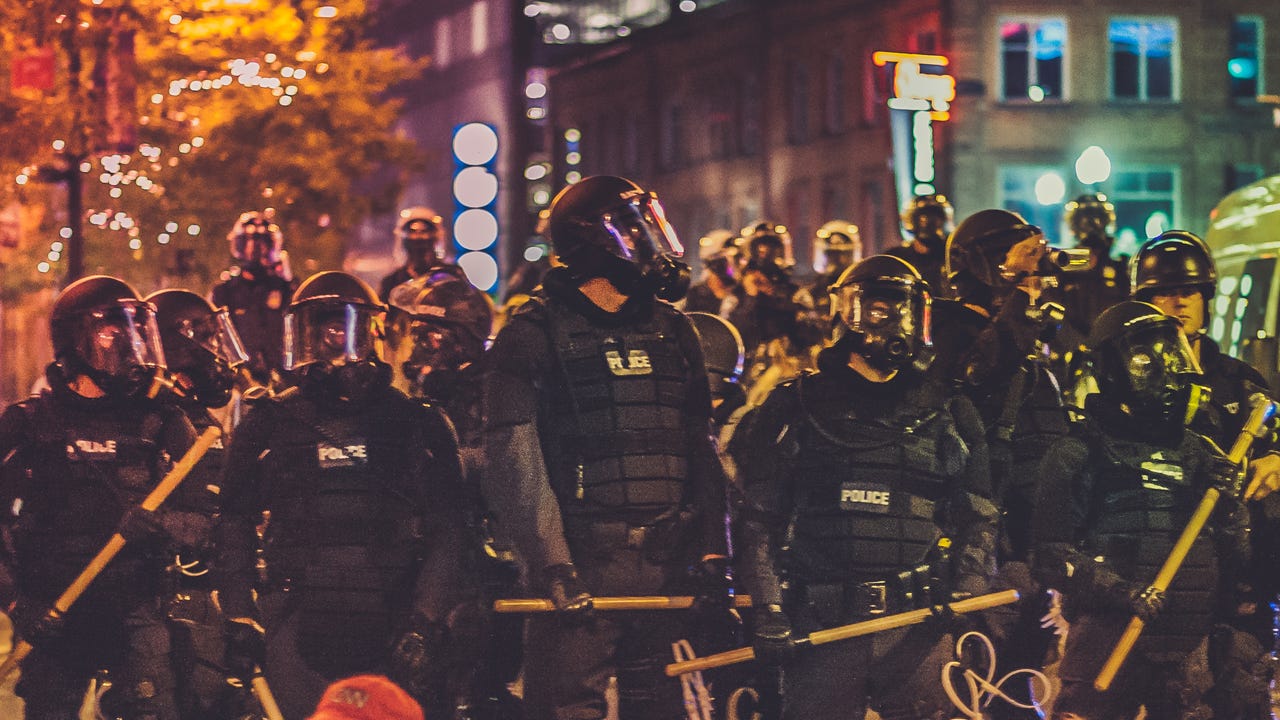
The United States of America is once again facing a constitutional and civil crisis, not on distant battlefields, but in the streets of Minnesota where violence has escalated and civil order has frayed. What began as protests tied to federal immigration enforcement has metastasized into sustained unrest, exposing a deeper national question. Who enforces the law when local and state officials refuse to do so?
The situation has deteriorated to such an extent that President Donald J. Trump has publicly warned that he may invoke the Insurrection Act of 1807 to restore order if Minnesota officials continue to abdicate their responsibility to protect life, property, and federal authority.
This warning did not arise in a vacuum. Violent demonstrations, vandalism, assaults on law enforcement, and the open obstruction of federal officers have become routine. Political leaders in Minnesota have responded not by restoring order, but by filing lawsuits condemning federal enforcement and effectively encouraging defiance. When governors and mayors place ideology above public safety the federal government is left with a solemn constitutional duty. That duty is embodied in The Insurrection Act of 1807, and is one of the most powerful yet misunderstood statutes in American law. Enacted during the presidency of Thomas Jefferson, it authorizes the President of the United States to deploy federal military forces, including active duty troops and federalized National Guard units within the United States when ordinary law enforcement mechanisms have failed.
The Act permits presidential action when insurrection, domestic violence, or unlawful conspiracies make it impossible to enforce federal law, or when states are unwilling or unable to protect the constitutional rights of their citizens. In short, it exists to preserve the Republic when civil authority collapses.
Normally the Posse Comitatus Act prohibits the use of the military for civilian law enforcement. The Insurrection Act serves as a narrow but explicit exception. It recognizes that there are moments when the enforcement of law and the preservation of constitutional order require extraordinary measures.
Critics claim that invoking the Insurrection Act is authoritarian. History proves the opposite. The Insurrection Act has been used sparingly and almost always in moments of grave national consequence.
In 1957, President Dwight D. Eisenhower invoked it to send the 101st Airborne Division to Little Rock Arkansas after the governor refused to comply with a federal court order to desegregate Central High School. State officials openly defied the Constitution. Federal troops enforced the law and protected American children exercising their civil rights.
During the 1960s, Presidents John F. Kennedy and Lyndon B. Johnson used the Act to quell violent resistance to civil rights enforcement across the South. These interventions were not acts of tyranny. They were acts of constitutional necessity.
After the assassination of Dr. Martin Luther King Jr. in 1968, riots erupted in major American cities. President Johnson again invoked the Insurrection Act to restore order when local governments were overwhelmed.
In 1992, President George H. W. Bush used the Act to deploy federal troops to Los Angeles after riots exploded following the Rodney King verdict. Entire neighborhoods burned while local authorities lost control. Federal intervention stabilized the city and saved lives.
Each of these episodes shares a common thread. State and local governments failed. The federal government stepped in to preserve order and uphold the law.
Minnesota today bears an unsettling resemblance to those moments.
Instead of enforcing the law, state leaders have chosen performative resistance. They have vilified federal officers, encouraged mass protest and allowed professional agitators to hijack public spaces. When federal agents are attacked and the enforcement of immigration law is obstructed, what exactly is the federal government supposed to do?
If a state refuses to protect federal officers, refuses to enforce the law, tolerates violence and lawlessness in the name of ideology, has it not already surrendered its claim to exclusive authority?
The Insurrection Act is not a tool of oppression. It is a constitutional backstop. It exists for moments precisely like this when elected officials abandon their oath and citizens are left unprotected.
The question Americans must ask is not whether invoking the Insurrection Act is extreme, but why Minnesota’s leaders have allowed matters to deteriorate so badly that such an invocation is even being discussed.
Law without enforcement is fiction. Rights without order are illusions. A republic that cannot defend its laws cannot survive.
History teaches us that presidents who invoke the Insurrection Act do so reluctantly but decisively when the alternative is chaos. Minnesota now stands at that crossroads.
If the rule of law is to mean anything it must be enforced everywhere, even in states whose leaders believe themselves immune from constitutional accountability.
President Trump needs to do this now - before MN gets more out of control
Great article!!