


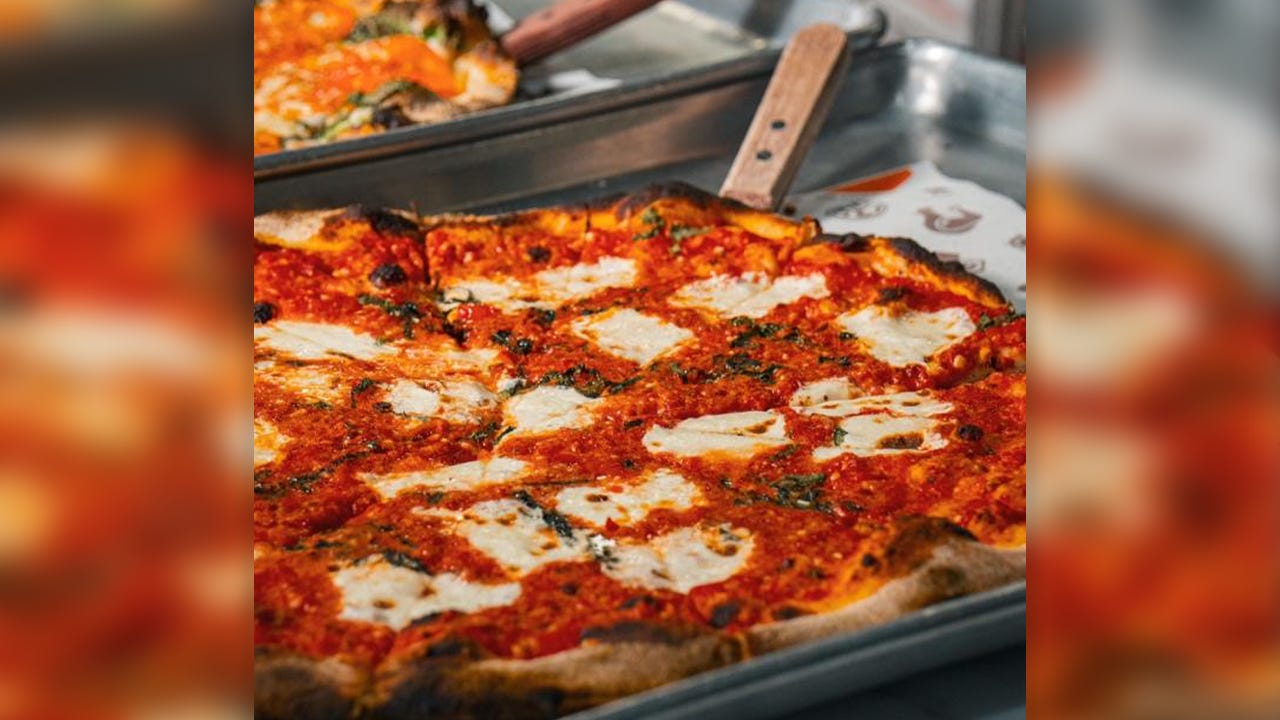
There is a “new’ style of Pizza that is about to sweep the country which is not new at all. New Haven, Connecticut roughly 75 miles northeast of New York City, is the birthplace of one of America’s oldest pizza styles: an irresistible, century-old tradition whose charred, blistered crusts have captivated palates since the early 1900s. On Wooster Street in the old Italian section of the city, the irresistible, smoky aroma of coal-fired ovens wafts between world-famous pizzerias, a sensory trademark of the signature apizza (pronounced “ah-beets”).
Different from New York or Chicago style pizza this Northeastern staple is now spreading across the country. Emerging in the 1920s, this New Haven based thin-crust, coal-fired pizza blended Neapolitan traditions with local innovations in a working-class city known for its industrial heritage. The charred, chewy crust—baked in high-heat brick ovens and often topped with no-refrigeration essentials like tomatoes and garlic—reflected both cultural roots and practical demands of the era.
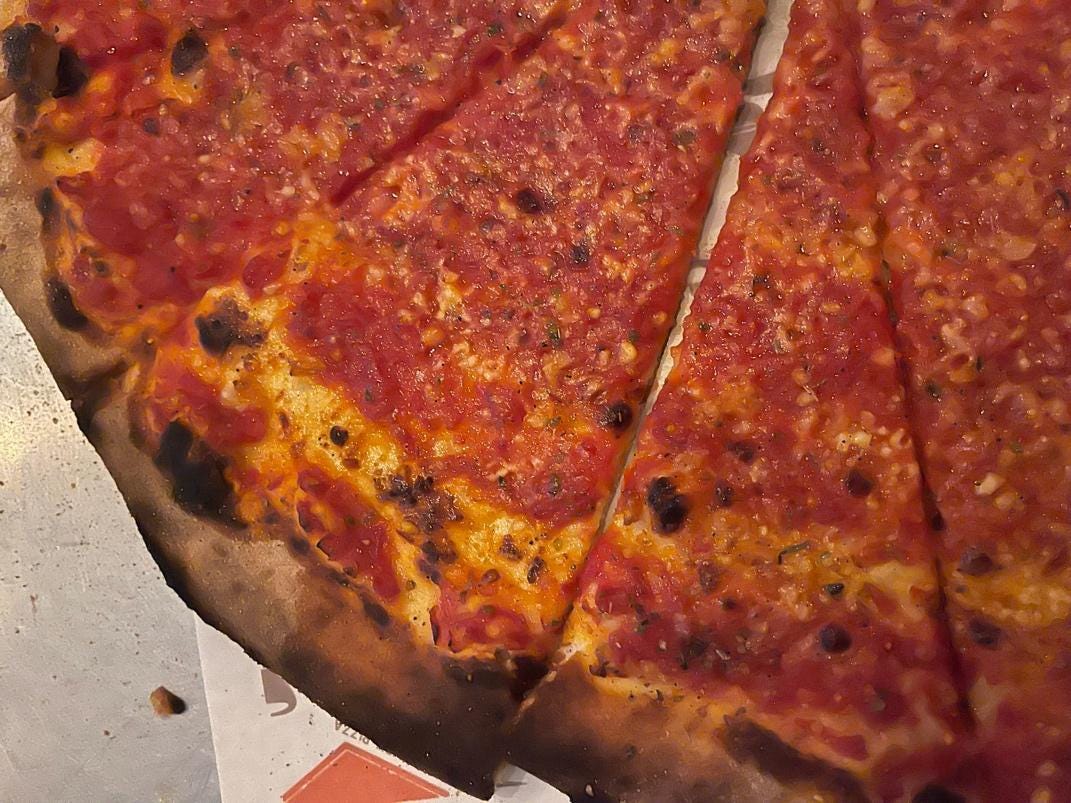
The style’s origins trace to New Haven’s Little Italy neighborhood, primarily Wooster Street, where waves of Italian immigrants settled in the early 1900s. They brought Naples recipes but adapted them to local resources, creating apizza as a distinct American variant. By the 1920s, pizzerias emerged, producing oblong pies focused on texture and char from coal ovens.
In 1980 when I was the Northeastern Regional Political director for Governor Ronald Reagan’s campaign for president, I brought my candidate for a tour of the pizza parlors and Italian bakeries on Wooster Street. I am not certain, but it may have been the first time Ronald Reagan had a cannoli.
Frank Pepe Pizzeria Napoletana holds special notoriety. Italian immigrant Frank Pepe started with a pushcart in 1925 selling simple tomato pies, then transformed a small bakery. His coal-fired oven delivered the iconic blistered, chewy crust. Early pies featured heavy tomato sauce, grated pecorino, garlic, and oregano—no mozzarella. These modest masterpieces drew lines and ignited Wooster Street's reputation as a pizza mecca.
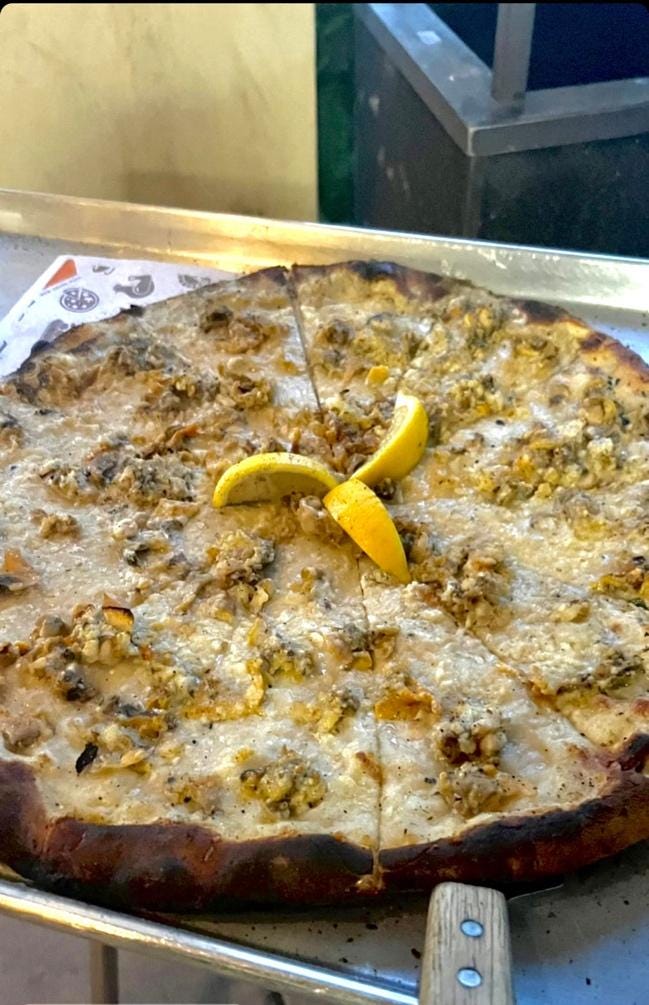
Pepe’s vision extended to toppings, most famously the white clam pie (invented in the 1960s): fresh clams, garlic, olive oil, and grated cheese—a light nod to New Haven’s coastal roots and Italian seafood traditions. Widely hailed as one of America’s best pizzas, it showcases how simple, fresh ingredients create extraordinary bites.
Over decades, Pepe’s has preserved original recipes, oven techniques, and family ownership—still guided by Frank Pepe’s grandchildren. They use the same wetter, longer-fermenting dough for richer flavor, hand-selected premium ingredients (imported Italian tomatoes, Sardinian pecorino Romano, fresh-shucked clams), and custom coal-fired ovens for that signature crispy-chewy, perfectly charred crust with smoky depth. Uncompromising quality—simple, high-end components executed flawlessly—turns each bite into enduring craftsmanship, not mass production.
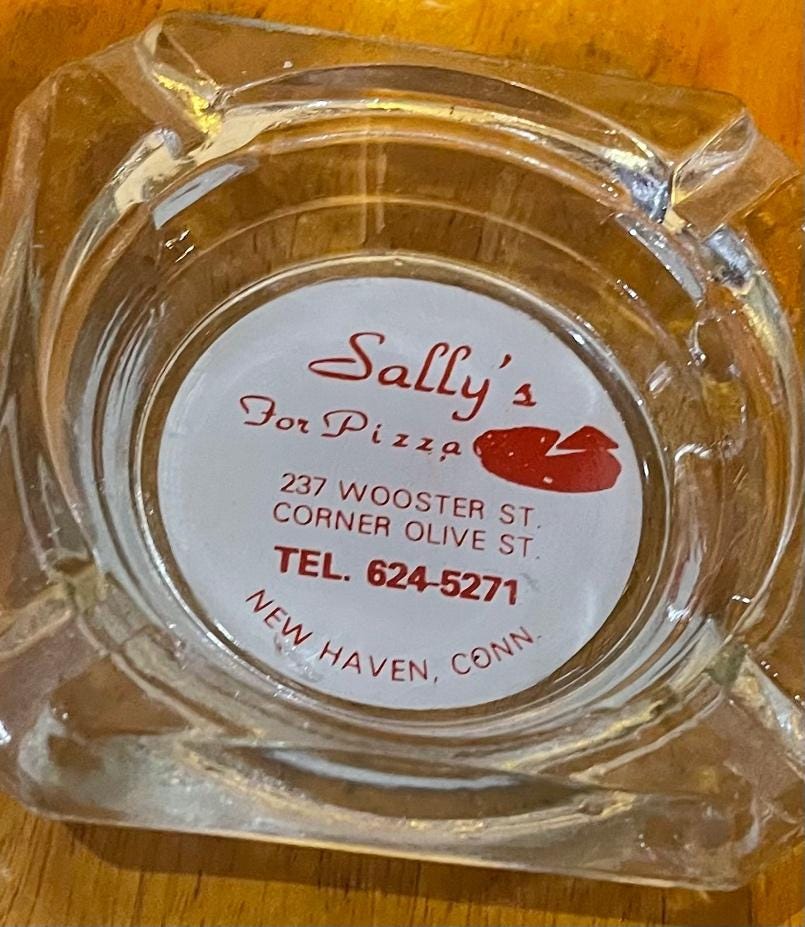
Sally’s Apizza, founded in 1938 by Frank Pepe’s nephew Salvatore “Sally” Consiglio, emerged as a direct rival on the same Wooster Street block. It gained fame for slightly sweeter sauce and generous toppings, sparking lifelong local debates despite subtle differences from Pepe’s. Sally’s pies feature irregular shapes and intense char from brick ovens.
The rivalry peaked in the 1970s with legendary lines, word-of-mouth buzz, and celebrity fans like Sinatra (who reportedly shipped pies to Las Vegas). Family-run until late 2017, it was sold to a hospitality group for cautious expansion while preserving core traditions. The “Chairman of the Board” was also known to also fly pies into Palm Springs from Grimaldi’s under the Brooklyn Bridge.
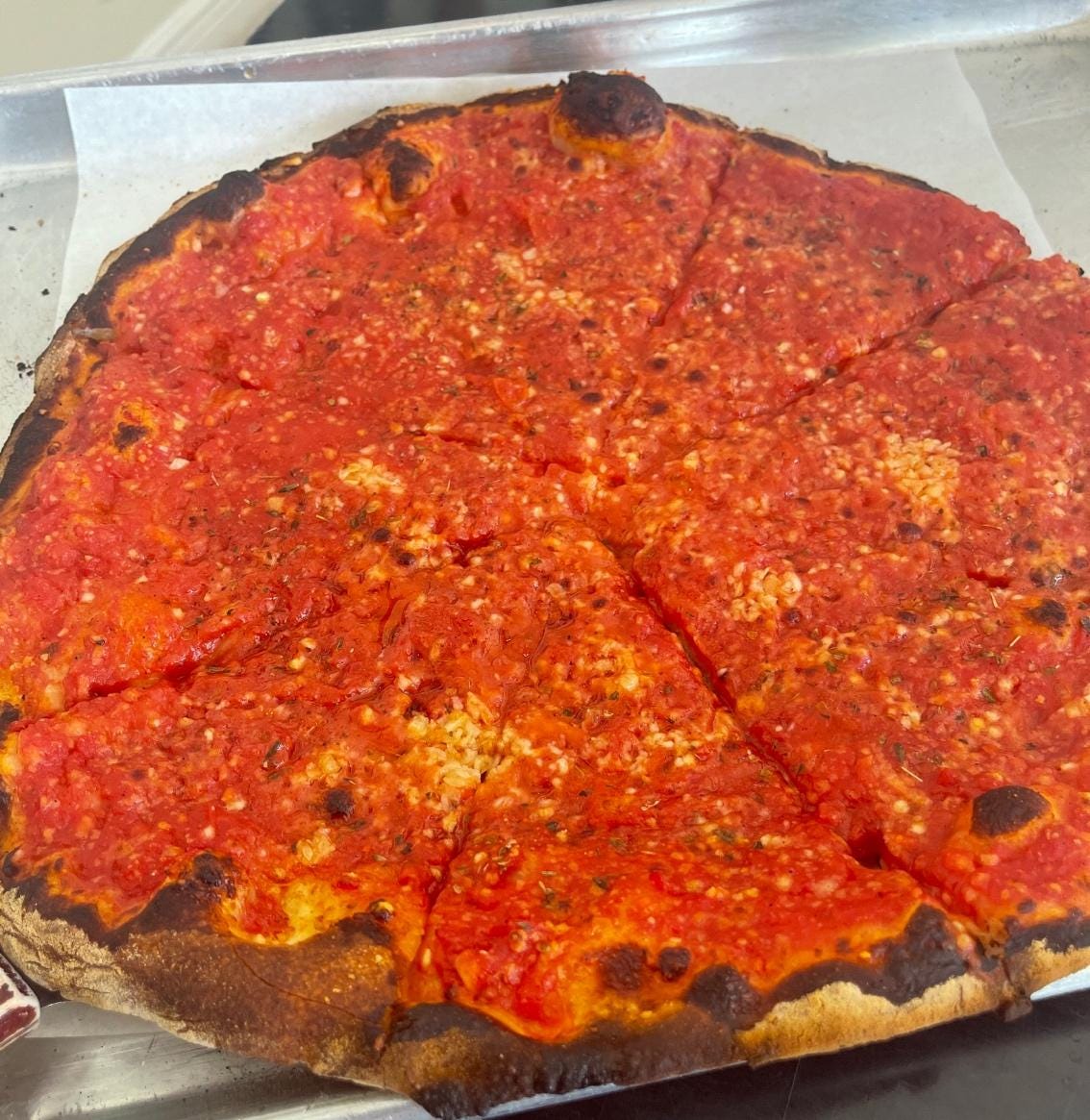
The New Haven Pizzerias, unlike chains, these pies prioritize quality over quantity, meant to be savored hot from the oven in a dimly lit, authentic atmosphere that draws pilgrims from afar.
Modern Apizza, established in 1934 on State Street away from Wooster Square, rounds out the Holy Trinity. Originally opened by Tony Tolli and later under different owners, it uses an oil-fueled brick oven for a crisp-yet-pliable crust. Praised for shorter waits, it’s a local favorite. Bold combos like the Italian Bomb (sausage, pepperoni, bacon, onions, peppers, mushrooms, garlic) show how the style handles hearty toppings without overwhelming the base.
Resisting large-scale growth, Modern maintains one neighborhood-gem location with checkered tablecloths and loyal fans. Named Pizzeria of the Year by Pizza Today in 2023, it ranked #1 in recent Connecticut polls (e.g., 2025 CT Office of Tourism Pizza Capital Trail, ahead of Pepe’s #2 and Sally’s #3) and often edges out rivals in national taste tests for balanced flavors. Founded amid the Great Depression, it symbolizes the scene’s resilience through urban renewal threats.
Pepe’s, Sally’s, and Modern form the trifecta defining New Haven style, drawing worldwide tourists. Debates rage—Pepe’s for origin, Sally’s for sauce, Modern for accessibility—but all embody charred perfection.
Frank Pepe Pizzeria Napoletana, the most expansion-minded of the trio, has grown to 17 locations across the East Coast (with an 18th slated for Westport, CT in summer 2026), stretching from Massachusetts to Florida. Despite faithful attempts to replicate coal-fired ovens and recipes, the push has faltered a bit—especially in southern spots like Plantation and Delray Florida—where inconsistencies in crust char, excessive flop, and diluted flavor undermine the original Wooster Street magic.
Some have attributed Pepe’s failure to recreate there Wooster Street masterpiece to localities whose local health ordinances don’t allow for an 800-degree oven. This requires that the Pizzaiola to bake the pie longer causing excessive crunch on the bottom.
Yelp and TripAdvisor ratings for Frank Pepe’s hover in the mid-3s to low-4s, with complaints about flavor-batch inconsistencies, soggier larger pies, and overall dilution at scale. Regional humidity, water differences, and higher volume make crisp, charred perfection hard to replicate. Many reviews praise the char and toppings as solid regionally, but consensus holds expansion has cost some soul. That said when I visited Frank Pepe’s outlet in Yonkers, New York. I thought the pizza easily rivaled the Wooster Street standard.
But now, a bold new contender is flipping the script: Ah-Beetz New Haven Pizza, a franchise powerhouse poised to take this century-old style nationwide without a single compromise on quality or authenticity has emerged.
Founded by New Haven native Nicholas Laudano from a family recipe dating to 1976, Ah-Beetz (phonetic for “apizza”) launched in Delray Beach, Florida, in 2017, dedicated to recreating charred, crispy-yet-chewy crusts and bold flavors. When lines went out of the door and around the block, Ah Beretz moved to large quarters in the same shopping plaza. Soon Ah Beetz had outlets in Royal Palm, West Palm Beach, North Palm Beach, Port Saint Lucie, as well as Marietta, GA, with rumors about a Fort Lauderdale location in the air.
What sets Ah-Beetz apart is its fierce ability to sweep the nation without sacrificing quality or authenticity—a commitment to perfection in every pie. They fire coal-fired ovens at blistering temps, ferment dough for days to unlock deep tangy complexity, and source toppings obsessively: fresh-shucked clams, imported Italian tomatoes, punchy Sardinian pecorino Romano. No shortcuts, no dilutions—every pie delivers signature snap-crisp char and smoky depth exploding in each bite, true to Wooster Street roots.
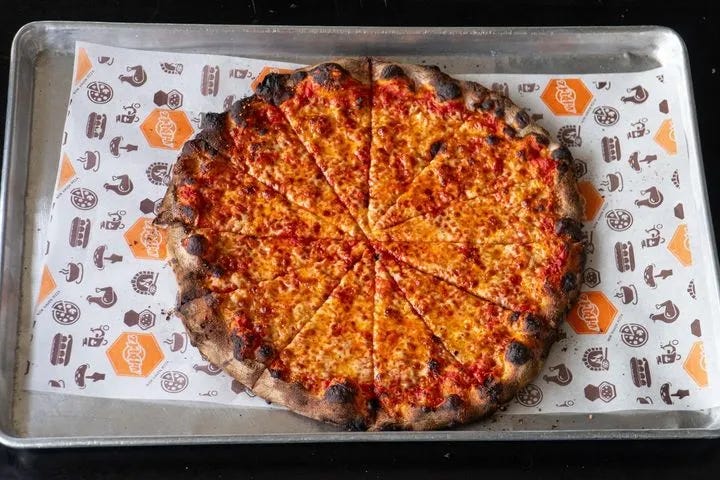
Hopefully, unlike the expansions that crumbled under the strain of scale, Ah-Beetz rises victorious through rigorous, hands-on oversight—every coal-fired oven blazing with the exact same intensity, every crust achieving flawless, blistering char, just like Wooster Street.
For those who will never visit New Haven or those who have never sampled New Haven style pizza, their best chance could emerge from the Ah Beetz brand.
Pizzeria Uno from Chicago tried to franchise and it failed. I guess waiting for the 45 minutes for the best deep dish in Chi Town could not be duplicated when they tried cooking frozen pies. I used to love deep dish but thin crust in the high heat is crazy good. My mouth is still watering from the pictures. Roger you could have waited until after dinner to post this. Yum.
I'm thankful that I was able to visit Frank Pepe's in New Haven years ago. It was my only trip to New England, and that stop was worth it!