


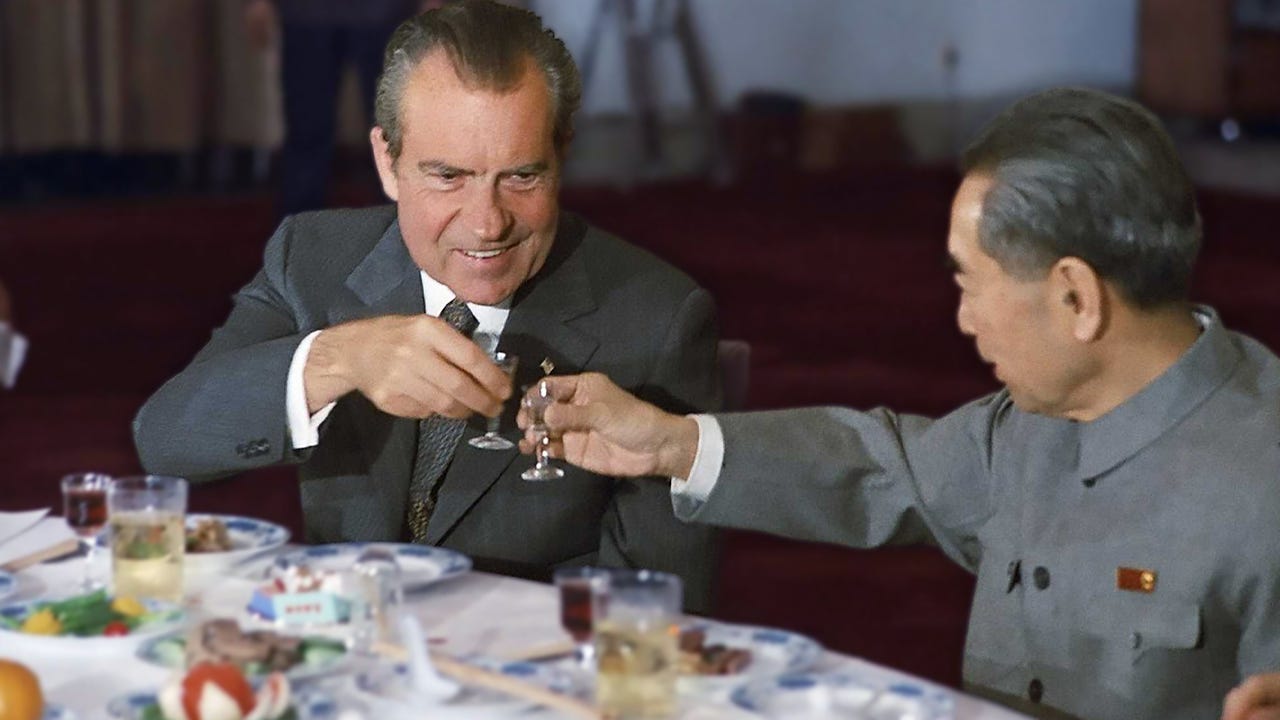
In February of 1972, President Richard Milhous Nixon accomplished what generations of diplomats, academics, and foreign policy mandarins had insisted was impossible. The fiercely anti-communist president who had built his career exposing Soviet espionage in the United States stepped onto the soil of the People’s Republic of China (PRC) and altered the trajectory of global geopolitics.
For decades prior, Communist China had existed behind an opaque ideological barricade. Since Mao Zedong’s triumph in 1949 the Chinese Communist Party (CCP) ruled a nation that was diplomatically isolated, economically stagnant, and politically convulsive. Washington had no formal relations with Beijing. American diplomats spoke of China only through intermediaries. The Cold War was defined by a bipolar confrontation between the United States and the Soviet Union, while China simmered as a volatile and unpredictable revolutionary state.
President Nixon saw something others failed to grasp. The communist world was not monolithic. In fact, by the late 1960s, the Sino Soviet split had grown into a deep strategic rivalry. Moscow and Beijing were not merely ideological cousins. They became competitors.
Nixon and his duplicitous National Security Advisor Henry Kissinger recognized an opportunity of historic magnitude. By normalizing relations with China, the United States could exploit divisions within the communist bloc and weaken the Soviet Union’s strategic position. It was a geopolitical triangulation of breathtaking sophistication. The gamble worked.
Nixon could not have known that thirty years later, President Bill Clinton would grant Communist China Most Favored Nation (MFN) status. That decision transformed China into an economic and military superpower that now threatens America. When Nixon recognized China, it posed no threat to the United States.
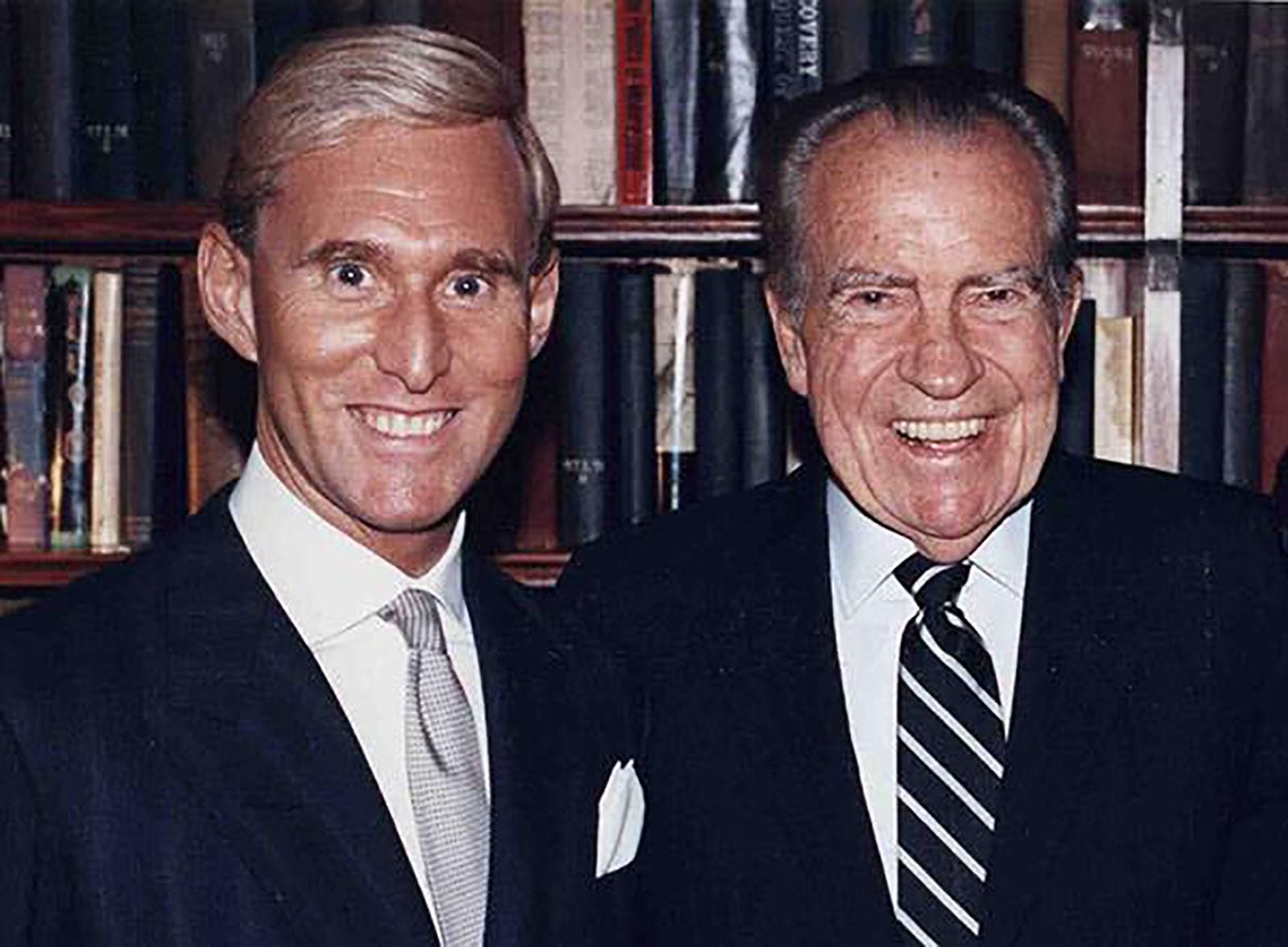
Ironically, Nixon told me that the principal reason he did not destroy the so-called Watergate tapes was that he knew that, after his death, Kissinger would seek to take credit for what were actually Nixon’s initiatives and policies. Nixon was the architect—Kissinger was the implementer. Nixon knew that the temperamental Kissinger would seek to rewrite history and saw the tapes as insurance for his foreign policy legacy.
Nixon’s 1972 visit to Beijing was not an act of naïve appeasement. It was hard nosed realpolitik. By normalizing relations with China, Nixon created leverage against the Kremlin while opening the possibility of gradual economic and diplomatic engagement with Beijing. Nixon masterfully played the Chinese and the Soviets against each other. The Shanghai Communiqué established a framework that reduced tensions while preserving America’s commitments to its allies.
At the time China was impoverished and technologically backward. The Chinese economy was smaller than that of Italy. Its military was large but antiquated. Nixon understood that bringing China into a structured relationship with the West could stabilize Asia while ensuring that the Soviet Union remained strategically encircled. For a generation, the policy appeared to succeed.
But what Nixon envisioned as a carefully calibrated diplomatic opening was later transformed into something far more reckless by successive administrations of both political parties.
The first major inflection point came under President Jimmy Carter. In 1979, Carter formally established full diplomatic relations with the People’s Republic of China and severed official ties with Taiwan. While the move was intended to cement the diplomatic framework Nixon had begun, it also accelerated the integration of China into the global system without adequate safeguards. Then came the economic revolution.
During the 1990s, the administration of President Bill Clinton made the fateful decision to support China’s admission into the World Trade Organization (WTO). Clinton argued that integrating China into the global economy would liberalize its political system. Western corporations flooded into China seeking cheap labor and access to massive markets. American manufacturing migrated overseas at an astonishing pace.
Instead of democratizing China, Clinton’s policies fueled the meteoric rise of the Chinese Communist Party’s economic and technological power. Entire industries were hollowed out in the United States while Beijing accumulated enormous trade surpluses and invested heavily in military modernization. The bipartisan consensus in Washington remained strangely complacent.
President George W. Bush maintained the engagement model, focusing primarily on counterterrorism after September 11. President Barack Obama attempted a “pivot to Asia,” but the economic entanglement with China had already become deeply embedded in global supply chains.
Joe Biden actually achieved the unthinkable—he drove our Russian and Chinese adversaries together rather than apart. We share a great common interest with Russia over the problem of Islamic terrorism. The Sino Soviet could be exploited again by Trump once the Russia-Ukraine war ends.
Meanwhile, the Chinese Communist Party pursued a long term strategy of technological acquisition, intellectual property theft, industrial espionage, and military expansion. Beijing constructed artificial islands in the South China Sea. It expanded cyber warfare capabilities. It weaponized trade relationships and invested heavily in strategic infrastructure across the developing world through initiatives such as the Belt and Road program.
The result is the geopolitical reality we face today. China has become the principal strategic rival of the United States in economics, technology, and military power.
Ironically, this outcome was not the inevitable consequence of Nixon’s opening to China. Nixon never envisioned turning China into the industrial workshop of the world while allowing American factories to close and strategic industries to migrate offshore.
Nixon was a fierce defender of American national power. He believed in engagement, but he also believed in leverage. Economic access would have been conditioned on reciprocity. Strategic industries critical to national security would never have been allowed to relocate wholesale to a communist regime. Nixon would never have allowed the Chinese flood of fentanyl into America.
Most importantly, my friend President Nixon understood the nature of communist governments. He dealt with them pragmatically, but he never trusted them. Had Nixon witnessed the strategic complacency that followed his presidency, he likely would have insisted on a far more disciplined approach. Trade would have been balanced. Technology transfers would have been tightly restricted. American industrial capacity would have remained protected. China would have been integrated into the global system only under conditions that strengthened American power rather than eroding it.
President Nixon opened the door to China in order to weaken America’s adversaries. He never intended for that door to become a conveyor belt through which American wealth, industry, and strategic advantage would flow directly into the hands of the Chinese Communist Party. The lesson is clear. Engagement without vigilance becomes surrender. Nixon understood that distinction yet his successors did not, to the detriment of our National Security.
Beautiful explanation of this topic. You have clarified the quandary I had about President Nixon's motives regarding China. I heard about the triangulation strategy at the time. Knowing Nixon's legacy as a staunch anti-communist, I wondered how he would have felt after his China opening and how we got to this point.
What a shame. Everyone after Nixon screwed up. And now look where we are.